

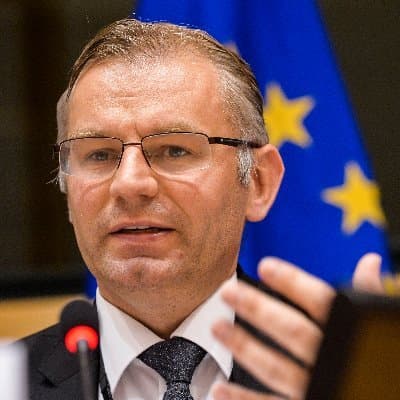
The German CDU politician told the German news agency DPA that the problem is not solved but merely shifted further into the EU. According to him, there should be consideration on how specially developed trade routes between Ukraine and the EU countries can be improved.
In the dispute over cheap grain from Ukraine, the European Commission has restricted the import of four Ukrainian products. Wheat, corn, rapeseed, and sunflowers may no longer be freely traded in Bulgaria, Poland, Hungary, Romania, and Slovakia until June 5. However, it is still possible for those products to be transported by the affected countries to other EU countries.
In the first week of June, the EU must decide on extending the exemption from import duties and quotas that it granted to Ukraine shortly after the outbreak of the Russian war. At that time, so-called solidarity corridors were also established to enable Ukrainian agricultural exports overland via Polish and Romanian ports. This was intended to circumvent the Russian blockade of Black Sea ports.
Promotion
In practice, the organized train transport via those routes proved to be extremely slow, while trucks carrying grain (thanks to the exemption) could enter the EU (mainly Poland and Romania) almost unhindered. As a result, a lively trade in 'cheap' Ukrainian grain emerged locally, and the markets of the immediate neighboring countries collapsed.
Blocking imports from Ukraine would not only harm Ukraine but also cause much suffering in the Middle East and Africa, said Finance Minister Serhiy Marchenko on Saturday during a meeting of EU finance ministers in Stockholm.
At the end of this week, the defense ministers of Turkey, Russia, and Ukraine will meet to discuss extending the internationally supported Black Sea transport. The current agreements expire on May 15. Russia is not keen on extension because Western sanctions against the country are not being eased.