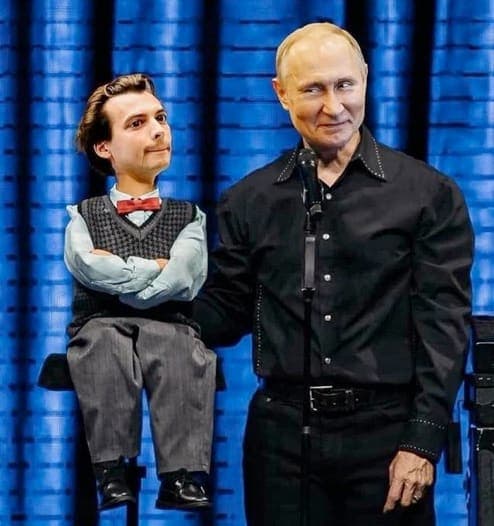
Trollrensics examined hundreds of thousands of messages on X (formerly Twitter) sent before and during the European elections. In Germany, at least 10 percent of all tweets about the far-right party Alternative für Deutschland (AfD) came from Russian accounts. In France, this applied to a minimum of 20 percent of all messages about the right-wing extremist Eric Zémmour.
Organized networks were active in France and Germany, but voters in the Netherlands, Italy, and the English-speaking audience were also manipulated by the troll network. This emerges from an independent investigation commissioned by the European Social Democrats group in the European Parliament (S&D) and GroenLinks-PvdA.
MEP Thijs Reuten (GroenLinks-PvdA) reacted with shock: “This shows that our democracy is vulnerable and that foreign powers are willing to invest significant money and effort to sow division. We must better defend ourselves against these attempts of foreign interference. I expect the European Commission and the intelligence services to take this seriously.”
MEP Kim van Sparrentak (GroenLinks-PvdA) said that this report confirms that anyone can manipulate social media platforms’ algorithms and use them against us. “This is a direct threat to our democracy. We cannot allow the status quo to continue, where tech companies decide what you see online based on their profit motive. We must act urgently.”
The study also shows that the German party AfD’s support got a significant boost thanks to the troll army. At least 10.7% of the tweets about AfD originated from the Russian disinformation network. The researchers also expect that the actual percentage in Germany is significantly higher.
Two years ago, after the start of Russia’s war against Ukraine, the European Union improved its monitoring of Russian propaganda activities. Efforts have also begun to take Russian (state) propaganda broadcasters off the air. Some European journalists’ unions consider this censorship and believe EU institutions should not intervene. Additionally, an investigation into Russian bribery among EU politicians and officials has already started within the EU.