

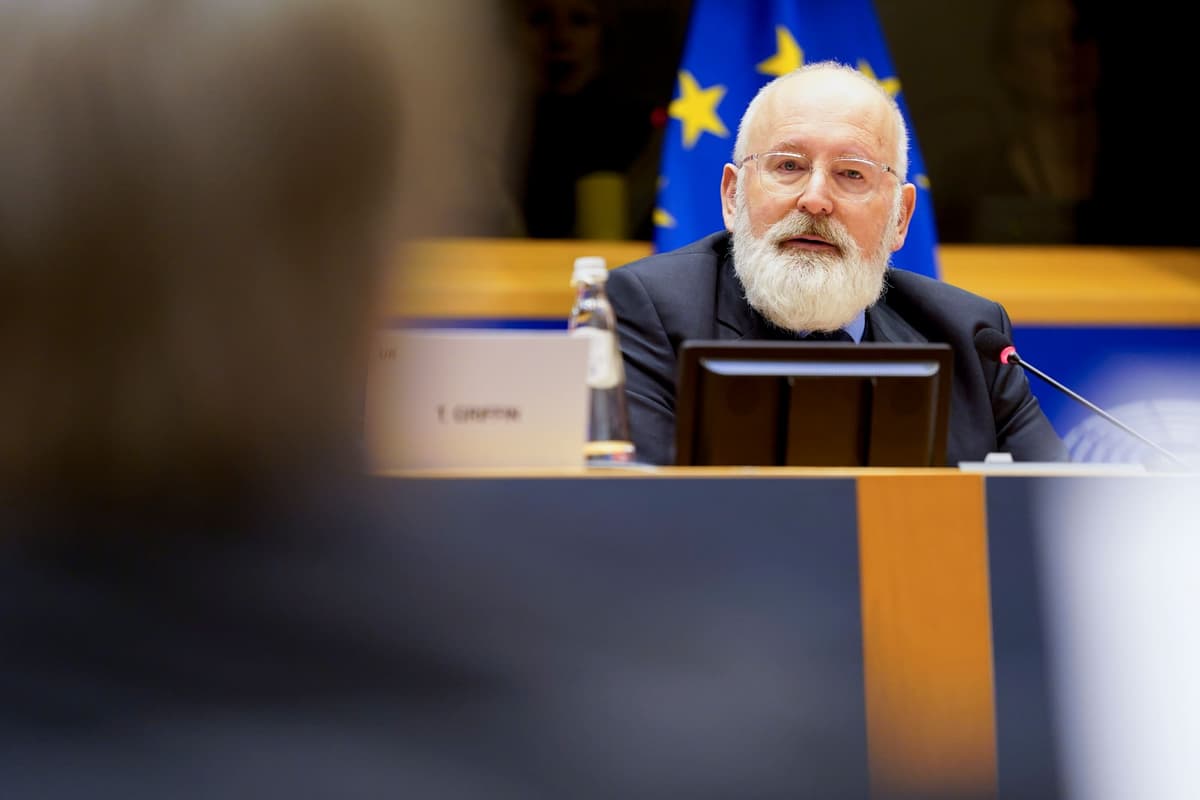
The European Parliament sees many positive aspects in the agreements recently made at the Climate Summit in Glasgow. Most Members of the European Parliament do not consider ‘Glasgow’ a failure, but rather a step in the right direction. Dutch MEPs are not all equally satisfied.
According to Climate Commissioner Frans Timmermans, clear progress has been made. The world still has a chance to limit global warming to 1.5 degrees Celsius. Countries that do not yet meet the criteria of Paris and Glasgow must return next year at a summit in Sharm-el-Sheikh with more ambitious national plans, stated the European Commissioner.
In response to questions from Dutch reporters, Timmermans said after the debate that the new European Climate Laws will also have consequences for the Netherlands and will likely need to lead to additional efforts. He expects that the upcoming coalition agreement will include extra restrictions against air pollution, particularly in agriculture, transport, and construction.
Promotion
Many MEPs believe that more global action is needed against climate change. Currently, only the EU has a climate law and clear plans to meet the climate goals for 2030. Some MEPs said that too many countries are not ambitious enough. A number of them pointed to China.
SGP MEP Bert-Jan Ruissen viewed it as follows: 'First, it is a good thing that we as the EU want to take the lead, but if we get too far ahead, we compete ourselves out of the market. Second, the EU cannot do this alone. Countries with very polluting industries, such as China and India, must also contribute.'
Global cooperation is crucial, Ruissen believes. 'Applying the emissions trading system globally now is an important step in that. And third, phasing out fossil fuels is necessary.'
Through COP26, the world for the first time underlines the importance of a maximum warming of 1.5 degrees, said Mohammed Chahim (PvdA). 'Remaining under two degrees is not enough.'
Bas Eickhout (GreenLeft) is not yet satisfied. 'This summit has clearly shown that we cannot wait another five years for new goals.' According to Eickhout, the European Parliament must 'truly prevent investments in gas from being labeled as ‘sustainable,’ as now threatens to happen.'