

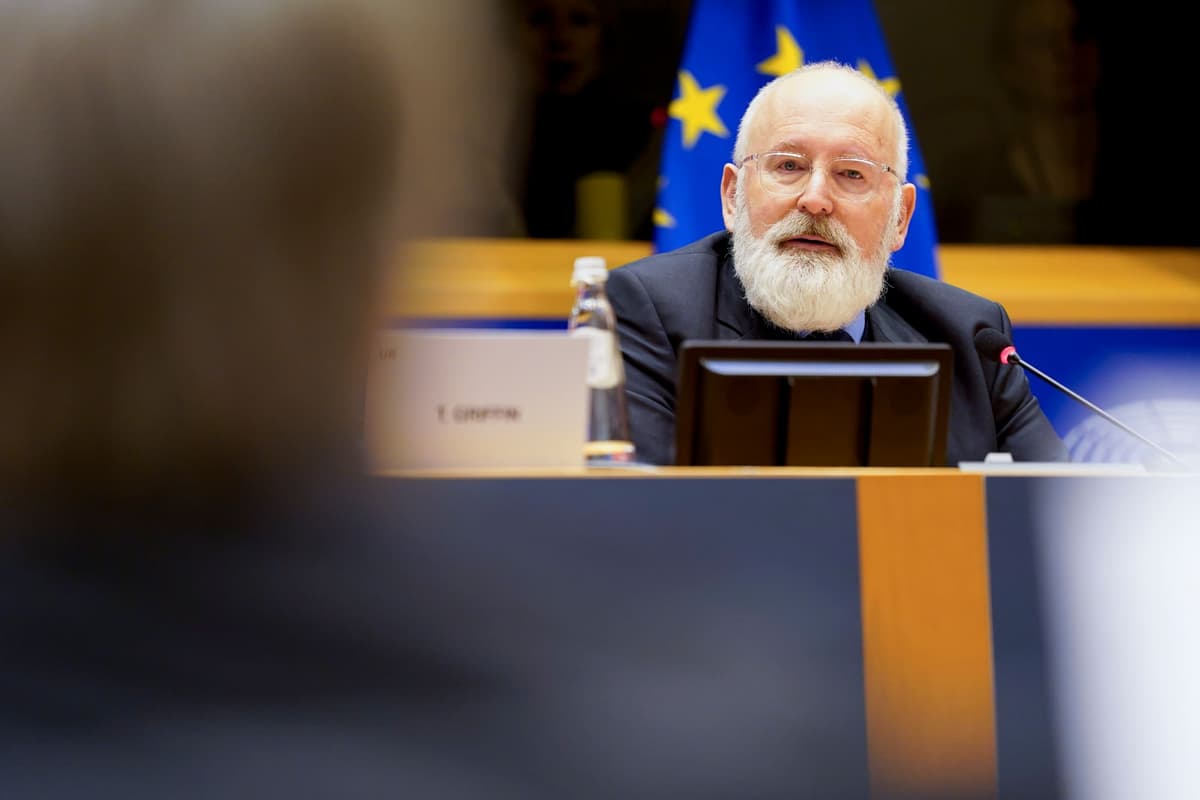
Vice-President of the European Commission Frans Timmermans believes that small agricultural businesses should benefit more from European agricultural funds. Timmermans plans to shift subsidies for agriculture and rural areas from payments to large agro-industries to direct income support for individual farmers.
On May 20, he will publish his long-awaited Green Deal, including his plans to make agriculture and livestock farming in Europe more sustainable, among other measures with a stricter ban on chemical pesticides and other rules against unnecessary animal transport.
In a video conference with the European Parliament's Agriculture Committee on Thursday, Timmermans said that food safety and biodiversity will also be on the agenda on May 20. Both are part of the growth strategy to make Europe climate neutral by 2050. The presentation of the so-called farm-to-fork strategy also faced delays in recent months due to the coronavirus crisis.
Promotion
According to the Dutch European Commissioner, many farmers are on the right track but need help with the “unavoidable transition,” Timmermans said. “The sooner, the less painful.” Timmermans emphasized the importance of reconciling environmental protection with food production.
He dismissed the idea that these two concepts are opposed. Handling pesticides differently is not only good for the environment but also for public health, not only for residents but also for the farmers themselves.
Timmermans sees huge opportunities for the agricultural sector. After the coronavirus pandemic crisis, Europeans take their food and health more seriously and many adopt a different lifestyle and dietary habits. Certainly for regional food, customers might be willing to pay a higher price, according to his assessment.
How much money will eventually flow from the Agricultural Fund and the new European corona recovery fund to agriculture is still under discussion, Timmermans said. Currently, almost a third of EU spending goes to CAP subsidies, of which about a third goes to some large food multinationals.
The 27 EU Commissioners are currently working on a reshuffling of all EU budgets in order to free hundreds of billions for economic recovery after the corona period. The European Commission is expected to unveil its new state aid rules for emergency situations in the coming days, allowing national governments to inject billions into struggling companies.
From Timmermans’ words, it was apparent that the European Commission will link decisions on climate policy, the Green Deal, multiannual financial frameworks, agricultural subsidies, farm-to-fork, and food together. Green Deal criteria could then become part of the conditions a company must meet to receive funds from the mega corona recovery fund. Polish Agriculture Commissioner Janusz Wojciechowski has been under heavy pressure in recent weeks in the EP Agriculture Committee to secure additional funds for the agricultural sector. With his Green Deal, Timmermans wants to shift the long-standing subsidy debate from more or less towards different.