

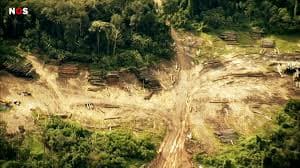
Companies will soon have to verify in advance whether their products contain materials derived from the clearing of primary forests, such as palm oil, soy, coffee, cocoa, timber, and rubber, as well as derived products (such as beef, furniture, or chocolate). The measure also applies to livestock fed with feed grown on fields located in cleared forest regions.
Importing companies will also be required to collect precise geographic information about the farmland where their products were cultivated, such as in maize used in animal feed. No country or product is banned as such, but companies will not be allowed to sell their products in the EU without such declarations.
Since the EU is a major consumer of such raw materials, this step is expected to contribute to reducing deforestation, thereby lowering greenhouse gas emissions and biodiversity loss, according to the European Commission. This agreement comes just before the start of the milestone Biodiversity conference (COP15), which will define nature protection goals for the coming decades.
Promotion
The Food and Agriculture Organization of the United Nations (FAO) estimates that between 1990 and 2020, 420 million hectares of forest—an area larger than the European Union—was lost due to deforestation.
The list of raw materials covered by the directive will be regularly reviewed and updated, taking into account new data such as changing deforestation patterns.
The new rules will not only reduce greenhouse gas emissions and biodiversity loss but also help secure the livelihoods of millions of people, including indigenous peoples and local communities who depend heavily on forests and primary woodlands.
The European Parliament and the Council will now have to formally adopt the new regulation before it can enter into force. Once the regulation is effective, operators and traders will have 18 months to apply the new rules. A longer implementation period applies to micro and small enterprises.