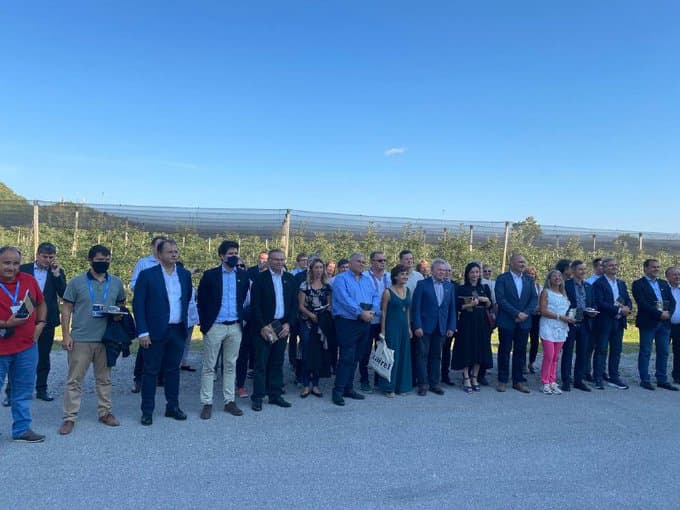
The EU countries' Agriculture Ministers have called for a stronger dialogue between urban and rural areas. During an informal meeting, Slovenian President Jože Podgoršek said that clashes between urban zones and the countryside must be avoided through technology and improvements in roads and connectivity.
According to Podgoršek, the nearly unanimous opinion was that “a multifaceted approach to rural development is necessary, utilizing not only the EU agricultural subsidies but also the new corona recovery fund and the already existing EU funds.
In many EU countries, the additional corona fund billions from the second pillar of agricultural subsidies are mainly used for the construction of new roads and railways, overdue maintenance, the installation of internet networks, and village renewal.
The ministers primarily used their brainstorming session in Slovenia to exchange good ideas.
Young farmers play a “key role in unlocking the potential of rural areas,” according to CEJA, the European Council of Young Farmers. In a speech to the agriculture ministers, CEJA Chair Diana Lenzi also spoke about strengthening the dialogue between urban and rural areas.
The EU's long-term vision offers sufficient opportunities to ‘address the serious challenges faced by rural communities,’ according to the association.
Spanish Minister Luis Planas stated that the discussion does not need to be about ‘additional’ money for the countryside because the EU already has sufficient resources that can be deployed for this – such as the existing recovery or structural funds.
Planas emphasized that rural areas in Spain cover about 85% of the territory, where approximately 20% of the citizens live. Poland is similarly extensive, but there more than forty percent of the population lives in small rural villages.
The obstacles and challenges faced by rural areas “are not only Spanish, they are European,” said the Spanish minister. According to him, what is needed are specific programs that, in addition to the CAP, indicate what can be done in terms of infrastructure and transport, education, and services such as keeping bank branches open in small villages.
The second day of the meeting was attended by European Commissioner for Agriculture Janusz Wojciechowski.