

The German agriculture company may therefore need to undergo a significant reorganization. The possible consequences of BayWa’s financial problems extend beyond the company itself. Given its important role in the agricultural and energy markets, instability at the company could have potential repercussions for its suppliers, customers, and the broader sector.
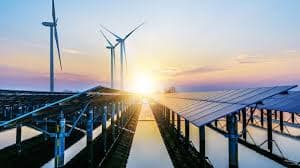
The South German agricultural giant’s investments in solar panels and wind turbines were seen as strategic steps to secure the future in the long term. However, apparently, these investments have not yet met expectations, leaving BayWa with considerable financial obligations.
After the nuclear disasters in Chernobyl and Fukushima, Germany decided to phase out nuclear energy. Furthermore, it is committed to reducing CO2 emissions from power plants (mostly fueled by mined brown coal) as quickly as possible and switching to the use of sustainable solar and wind energy.
Promotion
Additionally, in 2022, due to Russian military aggression westward, the EU countries decided to phase out imports of Russian natural gas as quickly as possible. For Germany, this meant canceling the nearly completed Russian Nord Stream gas pipeline. Partly for this reason, Germany’s large corporations and financial institutions are being encouraged to invest in new energy sources.