

The Russian Ministry of Trade and Industry has recommended that the country's fertilizer producers temporarily halt exports. Such a ‘recommendation’ effectively amounts to an export ban, ordered by the Kremlin. There are other countries that produce and export fertilizer, but they are significantly more expensive.
Belarus – a major supplier of potassium to countries in the European Union, South America, and the United States – has also stopped fertilizer exports because it no longer has access to the (Baltic Sea) port of Klaipeda in neighboring northern Lithuania.
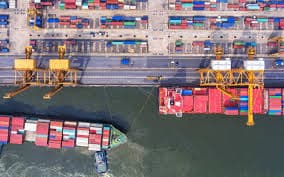
Last week, major international container carriers such as Maersk and Hapag-Lloyd decided to cease shipping to Russian ports. Maersk, which operates container shipping routes to Saint Petersburg and Kaliningrad in the Baltic Sea, Novorossiysk in the Black Sea, and Vladivostok and Vostochny on the Russian east coast, has temporarily stopped all container transport to Russia.
Promotion
The halt of Russian fertilizer exports affects not only European agriculture and horticulture but will also impact the global trade in soy and grains. Brazil, the world's largest producer and exporter of soybeans and an important global source of corn, will begin planting later this year, but the shortage of fertilizers will have a major impact on Brazilians.
The Russian import ban on fertilizer will especially affect African countries that can least afford the market disruption and have less access to alternatives, according to a former chief economist of the USDA.
Russia is a major producer of potassium-, phosphate-, and nitrogen-containing fertilizers – essential nutrients for crops and soil. It produces more than 50 million tons of fertilizers annually, 13% of the global total. Phosagro, Uralchem, Uralkali, Acron, and Eurochem are the largest players. They primarily export to Asia and Brazil.
EU countries depend on Russia for about 26% of their urea imports, 26% of their phosphate imports, and 21% of their potash imports. Brazil is similarly dependent on Russia, which supplies about 46% of Brazilian potassium imports, 20% of the country's urea imports, and 13% of its phosphate imports.