

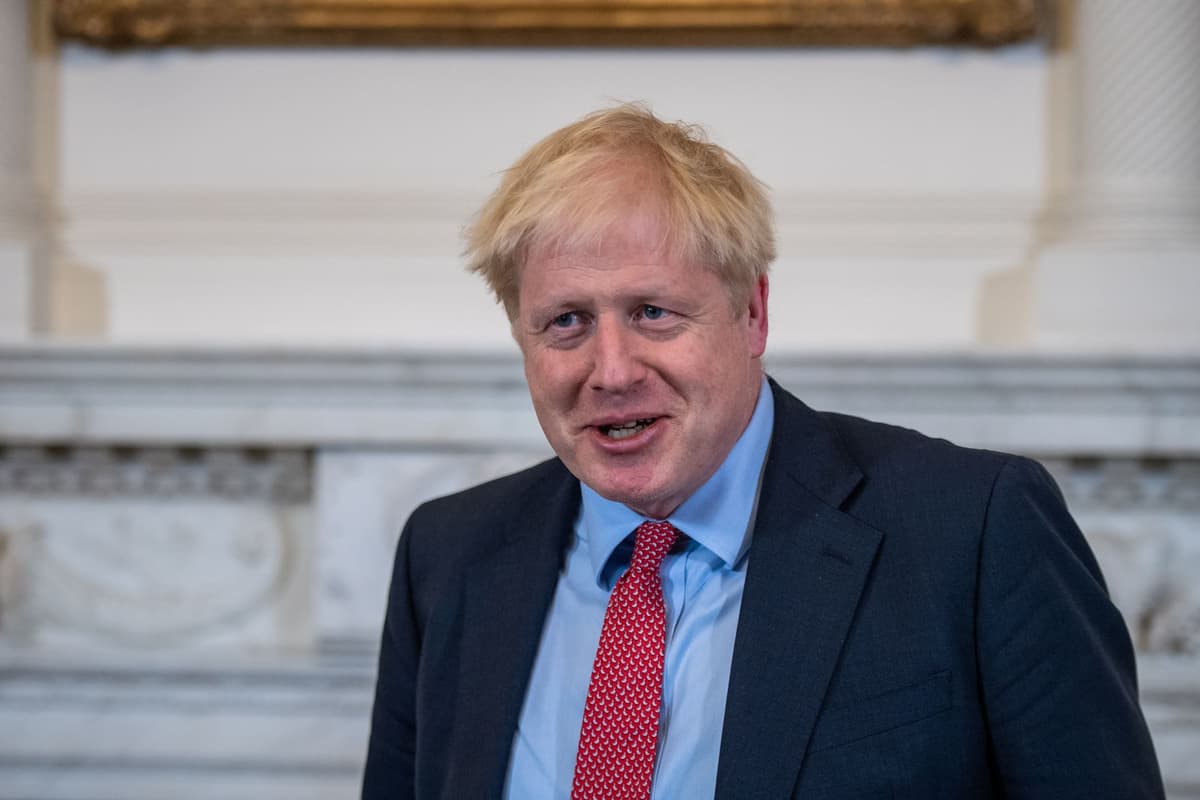
British Prime Minister Boris Johnson regrets that he was unable to get Great Britain to leave the European Union by October 31. He also criticized U.S. President Donald Trump, who said that the Brexit deal between Johnson and the EU would hinder a trade agreement between Great Britain and the United States. Johnson said that Trump is completely off base and that he has secured a tremendous deal with Brussels.
Johnson further stated that he does not want to allow a new referendum on Scottish independence. Johnson referred to the earlier rejecting referendum in 2014 as a “once in a generation” decision.
Johnson thus appears to be dashing Scottish hopes for a new independence referendum. To make such a referendum binding, the Scottish government needs approval from the British House of Commons. On Friday, Scottish Prime Minister Nicola Sturgeon said that she will request a referendum this year.
Promotion
According to the Scottish Prime Minister, this new referendum is necessary because Scotland is threatened with leaving the EU against its will. Since Brexit is being implemented against Scotland’s wishes, Edinburgh has, according to Sturgeon, a very strong mandate for an independence referendum.
But British Prime Minister Boris Johnson now says he will not allow a new referendum. Opposition leader Jeremy Corbyn, on the other hand, has already declared that he would not block a second Scottish referendum.
Nigel Farage, leader of the British Brexit Party, will not stand as a candidate in the British elections on December 12. Instead, he will campaign across Great Britain against the deal Johnson intends to make with the European Union. Farage has tried seven times in his constituency in previous elections to be elected to the House of Commons, but has not succeeded.
“I have thought long and hard about how best to advocate for Brexit. Should I try to win a seat in Parliament myself, or is it better to support 600 candidates throughout the United Kingdom? I have decided that the latter option is best,” Farage said.
Last week, Farage offered the Conservatives an election coalition: if the Tories were willing to withdraw Johnson’s deal with Brussels and pursue a no-deal exit from the EU, his Brexit Party would refrain from nominating candidates in more than 600 constituencies. Now that Johnson has rejected this, the staunchly anti-EU party will field its own candidates everywhere. This is seen as a threat to the Conservatives because dissatisfied anti-EU party members can now reject the Boris-Brexit-Barnier agreement at the ballot box.