

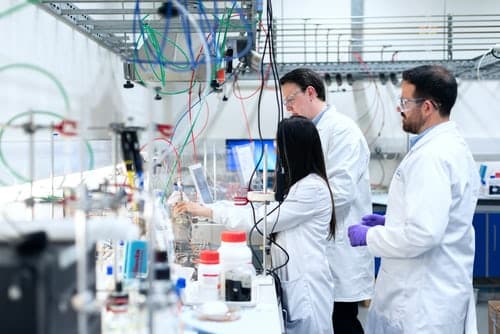
The British government has announced a consultation on allowing gene editing in agriculture and livestock farming.
Environment Secretary George Eustice said that this technology could bring significant benefits for nature and the environment. London can now draft its own laws on this since the United Kingdom is no longer part of the European Union.
Gene editing is different from genetic modification where DNA from one species is introduced into another. Genetically modified organisms do not contain DNA from other species.
Promotion
Editing rather than altering is, for example, the case with CRISPR-Cas. The European Court of Justice currently regulates gene editing in the same way as genetic modification, and therefore it is not allowed.
Nevertheless, CRISPR-Cas now has many supporters in EU countries that want to apply the technology more broadly. Dutch Agriculture Minister Carola Schouten and her German counterpart Julia Klöckner support this method, as do Spain, Denmark, Estonia, and Sweden among others.
The consultation launched yesterday in the United Kingdom proposes applying broader rules. This approach has already been adopted by a large number of countries, including Japan, Australia, and Argentina. Research has already demonstrated how gene technology can help in producing pigs resistant to harmful diseases such as PRRS and African swine fever.
In response to the announcement, vice-chairman Tom Bradshaw of the British agricultural federation NFU said that gene editing could provide great benefits for British agriculture. “New biotechnologies also make it possible to develop foods with much more direct benefits for the public, such as healthier oils, higher vitamin content, and products with a longer shelf life.
“We know that gene editing alone will not be a miracle cure, but it can be a very important tool to help us meet the challenges of the future,” said the English NFU leader.