

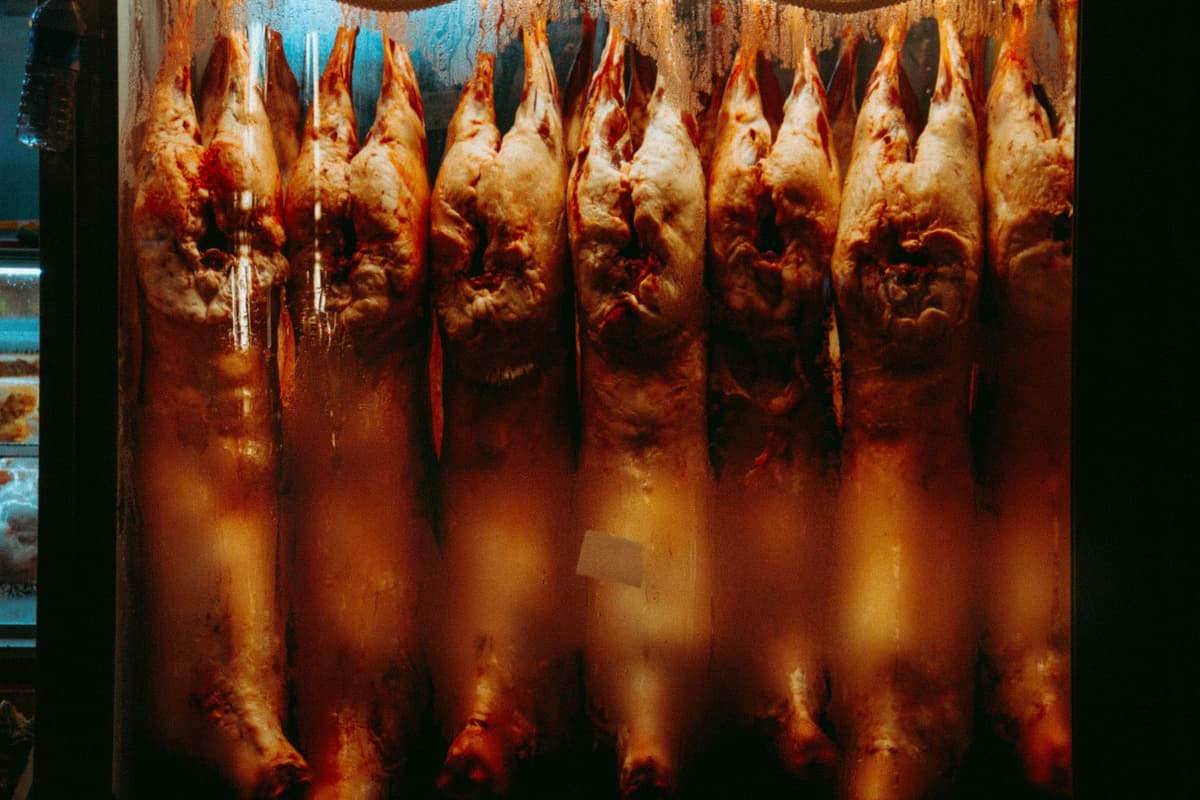
China has banned the import of pork from the German Tönnies group and of salmon from Europe as it launches an investigation into a new outbreak of the coronavirus. Chinese officials said that the meat and seafood sections at the Xinfadi market in Beijing were found to be ‘seriously contaminated’ with the virus.
The source of the new outbreak around Beijing is still unknown, but genetic traces of the virus suggest it may originate from Europe, according to the South China Morning Post.
The new outbreak at the covered food market has affected more than 100 people, including workers at the Xinfadi market. Most of them work in the seafood, beef, or lamb sections, and market workers from the fish market showed symptoms earlier than others, according to the Chinese Center for Disease Control and Prevention.
Promotion
On June 18, China banned imports of pork from the German producer Tönnies after more than 650 of its employees tested positive for COVID-19. On June 17, reports stated that China had stopped importing salmon from Europe after the virus was detected on cutting boards used in processing imported salmon at the market.
According to news reports from the British news agency Reuters, testing of containers for imports of meat, seafood, fruit, and vegetables began this week at Chinese ports. Reuters reported that every container at the port of Tianjin is being opened and boxes are being pulled out for virus testing.
At the facility in North Rhine-Westphalia of the largest German slaughterhouse, Tönnies, approximately 20,000 pigs are slaughtered and cut up daily. Measured by the number of animals slaughtered, Tönnies holds a German market share of 30.3%. Other major slaughterhouses are Vion, Westfleisch, and Danish Crown. Together, these four companies account for nearly two-thirds of the total German meat processing market.
In 2019, Germany slaughtered 59.7 million pigs, cattle, sheep, goats, and horses. Including poultry, companies produced almost 8 million tons of meat. Germany produces far more meat than it consumes. Nearly half is exported. German pork, slaughter waste, and poultry are particularly in demand. The largest buyer of German pork is Italy with 17%, followed by the Netherlands, China, and Poland with 9% each.
Last year, people in Germany each ate about 59.5 kilograms of meat. But their appetite for meat is decreasing, according to the 2020 Nutrition Report from the Federal Ministry of Food and Agriculture. The report states that only 26% still eat meat every day. In 2015, that was 34%.