

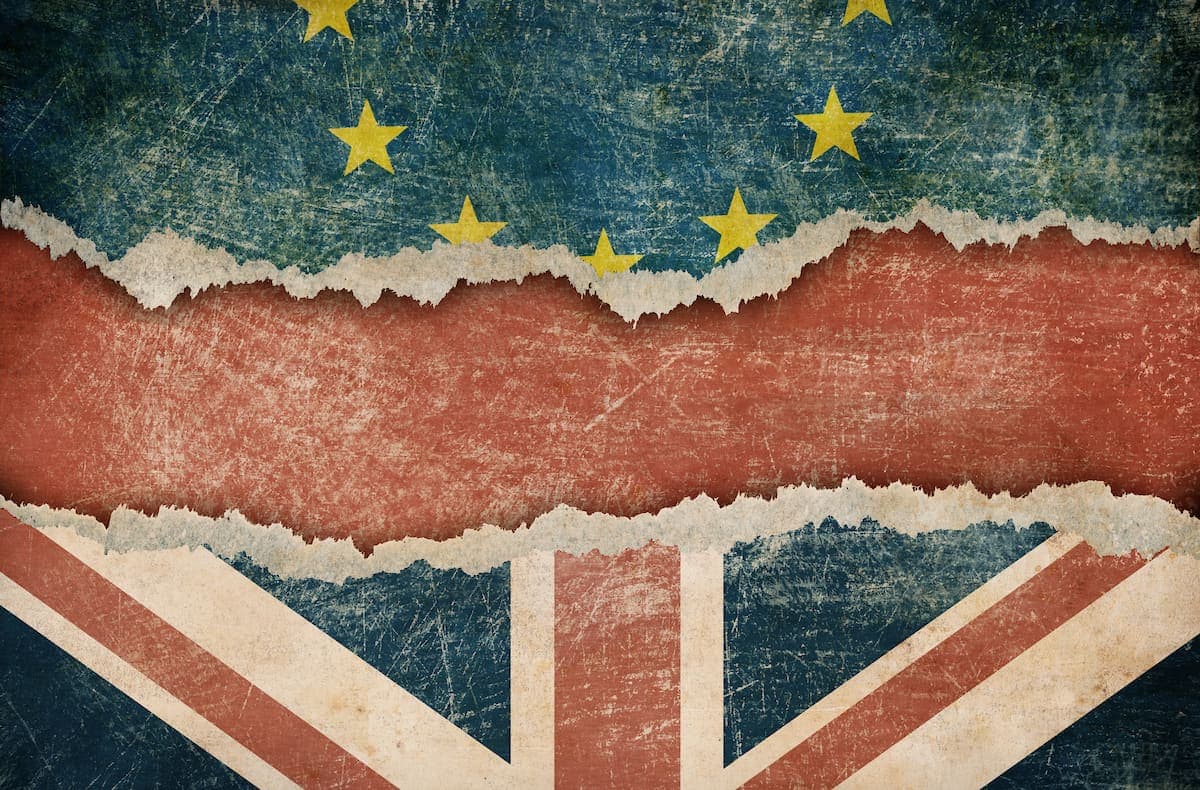
The United Kingdom is leaving the European Union on Friday evening after nearly fifty years. It is the first time since the establishment of the common union, 75 years ago at the end of World War II, that a European country has exited.
The break between the British and the union of 27 other countries on the European continent follows a referendum held over 3.5 years ago. At that time, 17.4 million British voters voted to leave the EU and 16.1 million voted to remain.
Supporters and opponents gather in several places to mark this historic moment. Proponents of the EU departure are celebrating, among other places, at Parliament Square in London that the break is finally happening. One hour before the moment, Prime Minister Boris Johnson will address the country via radio and television. The London municipality is organizing an event for Londoners from the other 27 EU countries. They can go to City Hall, among other things, for "emotional support."
Promotion
In Scotland, where by far the majority of voters wanted to remain in the European Union, pro-European activists gather outside the Scottish Parliament. As expected, the Scottish Parliament voted in favor of holding another referendum on Scottish independence. All 64 parliamentarians of the Scottish SNP party voted in favor, and 54 opposition members voted against.
Legally, the Scottish government cannot hold a referendum unilaterally but must also have the British government’s consent. Furthermore, the Scottish Parliament decided that the EU flag may continue to fly at the parliament building in Edinburgh after Brexit.
British Prime Minister Boris Johnson is reportedly willing to accept a trade agreement with the EU that was previously proposed by EU negotiator Michel Barnier. This was reported by The Times based on texts from a speech Johnson will give this coming Monday.
Negotiations on a British-EU trade agreement start next week and should be completed before the end of this year. Many experts believe this time frame is far too short for a fully new British trade agreement.
The trade agreement currently under discussion is similar to the recently agreed trade deal between the EU and Canada. In that case, the existing legal texts can largely be adopted. It enables trade without import tariffs but also leads to customs checks. The model does not apply to the large British services sector.
If an agreement cannot be reached before the end of the transition period, a chaotic break still threatens. Then the British government and the House of Commons will again face the choice to request an extension and postponement (something Prime Minister Johnson absolutely does not want), or to leave without a transition arrangement (a no-deal Brexit).