

The countries of the European Union must become independent of Russian gas as quickly as possible, they agreed over the past days at their summits in Brussels.
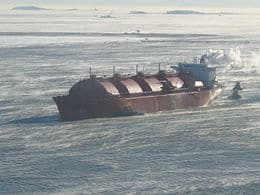
The United States will supply EU countries with at least 15 billion cubic meters more liquefied natural gas (LNG) this year than last year. That amounts to about 10 percent of what Europe still annually receives from Russia.
In total, Europe annually takes between 150 and 190 billion cubic meters of gas from Russia. Because some EU countries depend on that for more than half or three-quarters of their energy supply, some do not want to shut it all off abruptly. Therefore, other energy suppliers must first be found, such as Qatar, Saudi Arabia, or the US.
Promotion
By 2030, the US aims to supply the EU with 50 billion cubic meters of liquefied gas. That could replace a third of the annual volume coming from Russia. Insiders believe this multiplication could be in sight within two years. Canada has also pledged to supply more LNG and oil to the EU countries.
The EU and the US are further focusing on gas savings. They will, for example, stimulate the use of smart thermostats, train solar panel installers, and facilitate the granting of permits for green energy. They will also reduce the CO2 emissions of LNG installations.
Additionally, it was decided to accelerate Climate policy and the transition from fossil to sustainable energy, and that the EU itself must produce more of its own biogas. The new German coalition has set a new political goal to be completely free of fossil gas by 2027, which is a huge turnaround compared to their earlier plans involving the Russian Nord Stream 2 pipeline. Germany also wants to halve the import of Russian oil this year.
However, to supply, store, and transport much larger volumes of liquefied LNG gas, additional storage tanks and processing installations must be built quickly. EU countries with seaports will potentially become important new 'gas roundabouts.' It is expected that EU countries will likely pay more than they currently pay for Russian gas.