

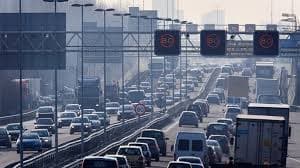
The auditors note that the actual emissions of conventional cars — still almost three-quarters of new cars — have not decreased. Over the past ten years, emissions from diesel cars have remained steady, while those from petrol cars have marginally decreased (–4.6%). Technological advances in engine efficiency have been offset by heavier vehicles (on average about +10%) and more powerful engines (on average +25%).
Electric vehicles can help the EU establish a zero-emission fleet. However, the EU auditors warn that efforts in this area need to be increased. According to the EU auditors, only electric vehicles have contributed to the decrease in average CO₂ emissions on the road in recent years.
"The EU's green revolution can only happen if there are significantly fewer polluting vehicles, but this is a huge challenge. A truly noticeable reduction in car CO2 emissions will not be achieved as long as the combustion engine remains the norm. At the same time, transforming the EU fleet into a fully electric fleet is a major undertaking," stated the Court of Auditors.
Promotion
According to the ECA, a primary obstacle is access to raw materials needed to produce enough batteries. Previously, the EU auditors also expressed concern over the inadequate charging infrastructure: 70% of all charging stations are located in only three countries (the Netherlands, France, and Germany). In other EU countries, the installation of charging points has only recently begun to gain some momentum.
Although the EU has succeeded in reducing greenhouse gas emissions in many areas over the past thirty years, CO2 emissions from the transport sector have steadily increased. In 2021, this sector accounted for nearly a quarter of the total greenhouse gas emissions in the EU, with more than half attributed to passenger cars.