

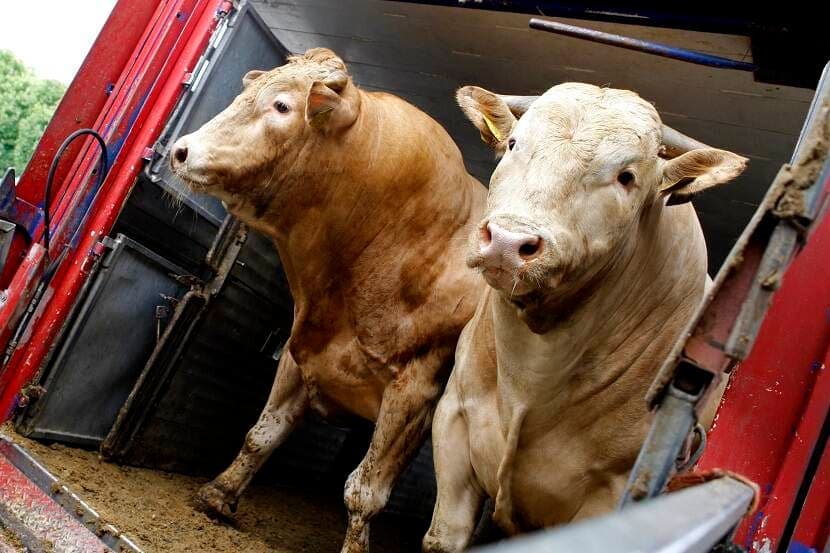
According to EU researchers, the current situation raises the question of whether the existing standards are appropriate.
Every year, tens of millions of cattle, pigs, sheep, goats, poultry, and horses are transported for breeding, fattening, or slaughter. The auditors say this is due to livestock traders trying to exploit price differences between EU member states to make a profit.
In an analysis published on Monday, the EU auditors highlight trends in animal transport. They point out that livestock farming is not evenly distributed across EU countries and regions, and that farmers often specialize in one species or production stage. Moreover, the number of farms and slaughterhouses is decreasing, but their size is increasing.
Promotion
“EU legislation on the transport of animals is not enforced in the same way by member states, and there is a risk that transporters exploit loopholes resulting from the different national sanction systems,” said Eva Lindström, the Court of Auditors member who led the investigation.
There is a risk that transporters choose longer routes to avoid countries with strict enforcement of EU rules. The auditors emphasize that the negative effects can be reduced by decreasing both the number of transports and their duration.
They also point to alternatives to live animal transport. In some cases, slaughter could be brought closer to the production site: using local and mobile slaughterhouses would make animal transport partially unnecessary and more environmentally friendly.
Consumers also play an important role in initiating change. A survey shows that some are willing to pay more for meat, but only if they know the animals had a good life. According to the auditors, consumers would make more informed purchases if they were better informed on this topic. This could be achieved by introducing an EU-wide labeling system for animal welfare.