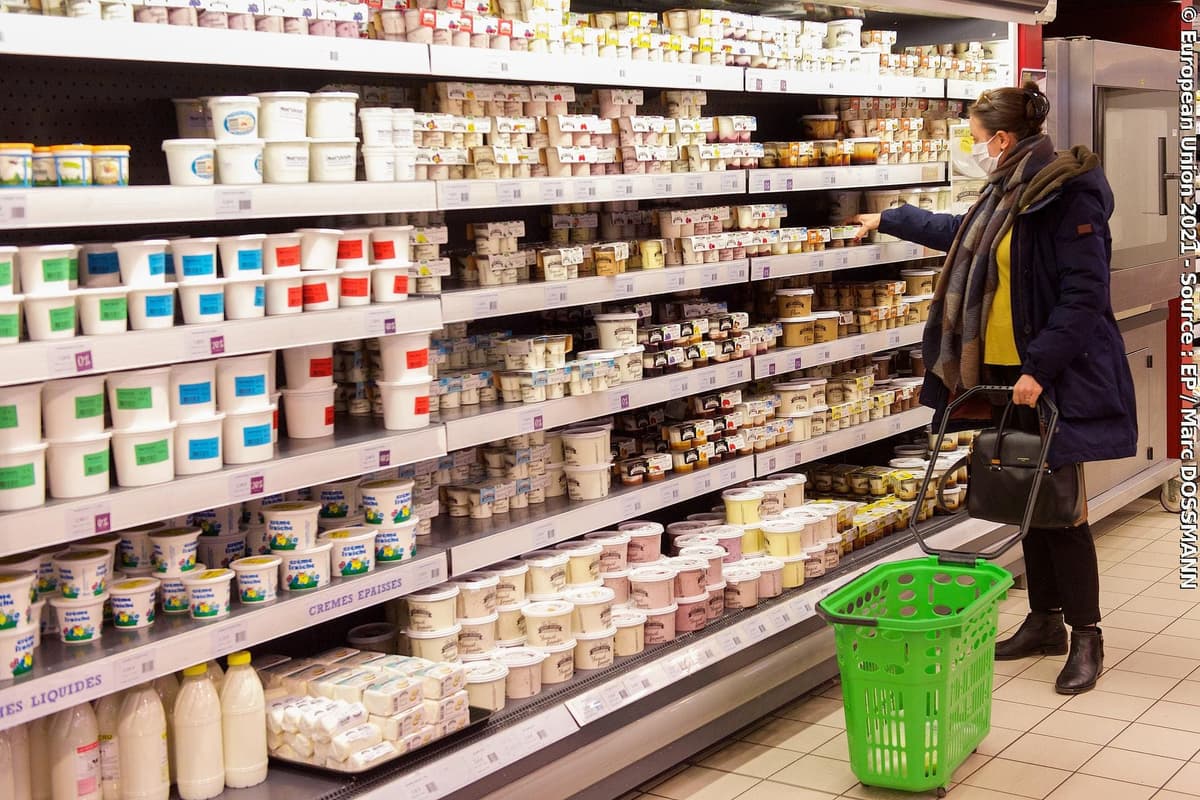
As a result, more typically British food products can be fast-tracked through British and EU customs, improving the supply of shops. This supply has been faltering since the English left the EU with their Brexit.
Because both Great Britain and EU member Ireland wanted to prevent a new 'hard' border between Ireland and the British province of Northern Ireland, it was decided after Brexit to place the EU customs border in the Irish Sea, between Ireland and England. But this meant Northern Ireland would fall within European legal territory.
The latter was considered by fiercely pro-British politicians in Northern Ireland as a reprehensible first step toward London 'letting go' of their overseas territory. And in the British parliament in London, the Tories (the Conservative Party) depend on that pro-British Northern Irish party for their majority.
Due to the political disagreement over whether or not Brexit or EU membership should continue, the Northern Irish provincial government (in Stormont) has also been inactive for more than a year. The EU was willing to cooperate on easing customs rules for Northern Ireland, as long as this would not create a new smuggling route or tax evasion.
There will now be special export forms and scan codes for 'English end users' in Northern Ireland. This makes delivering groceries from the UK to Northern Ireland easier. EU Commission President Ursula von der Leyen and British Prime Minister Rishi Sunak on Monday added the so-called Windsor Agreement to the Northern Ireland Protocol.
Von der Leyen explained that English food products must not be withheld from consumers in Northern Ireland, but that EU rules will remain mandatory for deliveries to EU countries. In practice, border checks in the Irish Sea will be abolished for registered food exports labeled "Only Northern Ireland".