

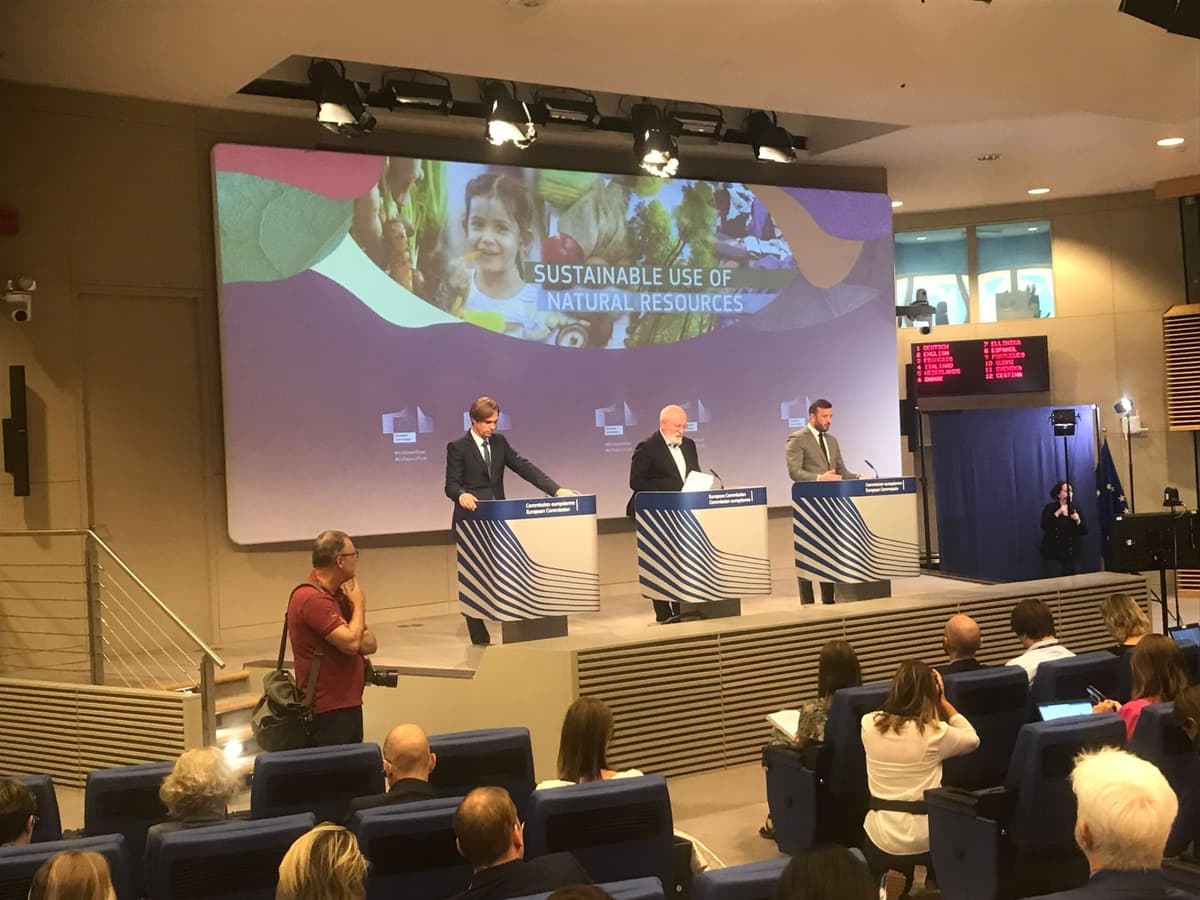
He sees increasingly entrenched positions emerging and points to the recent rise of populist, anti-European parties opposing climate and environmental measures.
Sinkevičius notes that the Green Deal was established in mid-2019 under very different circumstances, and that the situation is now quite different: not only politically but also among the public.
"We have a stable majority in the EU that supports the Green Deal," he said, referring to the current support of the European Parliament for the green agenda in general. "But then we come to more difficult issues, which I think will inevitably be influenced by political debate," he recently told the news agency Reuters.
Promotion
After the Paris Climate Agreement (2015), following growing protests by youth across all EU countries led by Norwegian Greta Thunberg (2018), pro-environment parties made significant electoral gains nearly everywhere in the European elections.
"The circumstances now are definitely different than in 2019, when we started with maximum support and political readiness for action across almost all political parties," said European Environment Commissioner Virginijus Sinkevičius recently.
Some EU member states are now, barely five years later, opposing car exhaust regulation and seeking to relax stricter controls on pollution from livestock farming and agriculture. A proposal to improve the insulation of homes and government buildings (to save gas and energy) faces resistance from countries worried about the costs.
The chairman of the ENVI environment committee of the European Parliament, the French liberal Pascal Canfin, also notes increasing polarization, as recently seen around the Nature Restoration Law (NRL). Next month, efforts will be made to align the 27 Environment Ministers and the rapporteurs from the Environment Committee as quickly as possible, so that the heavily diluted Nature Restoration Law can be definitively adopted before the June 2024 elections.
Canfin believes – in hindsight – that the European Commissioners should have submitted all their nature and climate plans to Parliament in a single proposal. Now they had to agree only on parts of the package and wait for the rest.
"If the halving of chemical use, Nature Restoration Law, soil and land rights, new breeding techniques, and so forth had been presented together, every party would have benefited, and the entire process would have been much simpler. That would have prevented polarization in this form."
According to Canfin, his Nature Restoration Law was unnecessarily watered down by the conservative majority of the European Parliament as a result.