

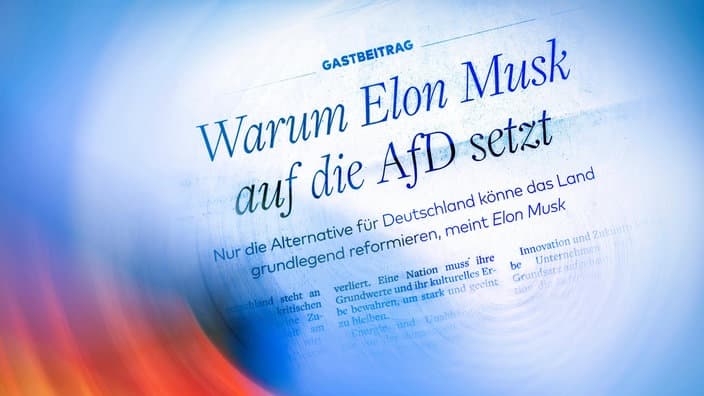
Over the past months, he has donated many millions of dollars to Donald Trump’s election campaign in the United States and has presented himself more or less as Trump’s closest aide. Recently, Musk has also increasingly involved himself in politics in European countries.
Members of the European Parliament from various parties, including Renew and the Greens, have called on the European Commission to launch an investigation into Musk’s possible violation of the Digital Services Act (DSA). They argue that X could disproportionately promote the interview, putting other political parties at a disadvantage. Damian Boeselager of Volt stated that this sets a “dangerous precedent” and called for clear guidelines for social media platforms during election periods.
According to the DSA directive, platforms must be transparent about how they distribute information and must not take actions that disrupt democratic processes in EU countries. French MEP Sandro Gozi sharply criticized the European Commission for not proactively acting against Musk.
Promotion
The European Commission is currently investigating whether the interview violates the DSA. According to a spokesperson, the focus is on whether Musk's platform offers unfair algorithmic advantages to specific political candidates or parties. Although there is no explicit ban on interviews, critics emphasize that X has a responsibility to ensure neutrality during election campaigns.
The political tensions are further heightened by recent opinion polls indicating that the AfD could possibly become the largest party in the upcoming Bundestag elections. With an estimated 21% of the vote, the party could form a government together with the CDU/CSU or the new party Bündnis Sahra Wagenknecht (BSW). The AfD is known for its EU-critical and Russia-friendly positions, which raises concerns among pro-European parties.
The planned cooperation between Musk and Weidel raises broader questions about the role of technology companies in politics. Critics argue that it is not the role of a tech magnate to steer public opinion or influence election outcomes. On the other hand, supporters of Musk’s actions point to the importance of freedom of expression.
The debate about Musk’s role in the elections serves as a test case for how the EU can regulate digital platforms to guarantee fair elections. Meanwhile, pressure is growing on the European Commission to take action against Musk’s alleged interference.