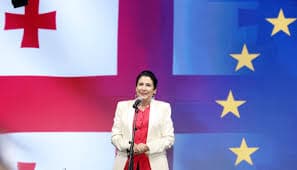
The call comes at a critical time as Georgia will hold parliamentary elections in two weeks and hopes to expedite negotiations over EU accession. Brussels views adherence to a pro-European course as a condition for further progress toward membership. The European Commission has already indicated that Georgia must comply with 12 reforms to strengthen the rule of law, press freedom, and democratic reforms.
Although Georgia obtained EU candidate status last year, the European Parliament stresses in a resolution that the currently ruling Georgian Dream party—seemingly headed to win the elections—is pursuing an increasingly authoritarian course.
Tensions surrounding the pro-Russian laws have sharply increased since early last year between pro-Moscow parties and pro-EU parties. Although the legislation was later withdrawn following large protests, it remains a hotly debated issue ahead of the elections.
Despite this domestic division, public support for EU membership in Georgia remains strong, especially among young people and pro-European groups. The October 26 elections are seen as a decisive moment for the country's future. Opposition parties, led by pro-European President Salome Zourabichvili, have formed an alliance in an effort to defeat the pro-Russian Georgian Dream party.
The European Union has repeatedly stressed the importance of the elections being free and fair. If this is not the case, the EU threatens possible sanctions, including suspending visa-free travel for Georgian citizens and withdrawing financial aid packages.
The democratic backslide of Georgia is a major concern in Brussels and Strasbourg. Within Georgia itself, public opinion is divided. While many citizens support EU integration, there are also strong pro-Russian currents within certain political parties. This causes political polarization and threatens the country's stability. The election outcome will be decisive in determining whether Georgia continues to follow its European course or slides towards authoritarianism.