

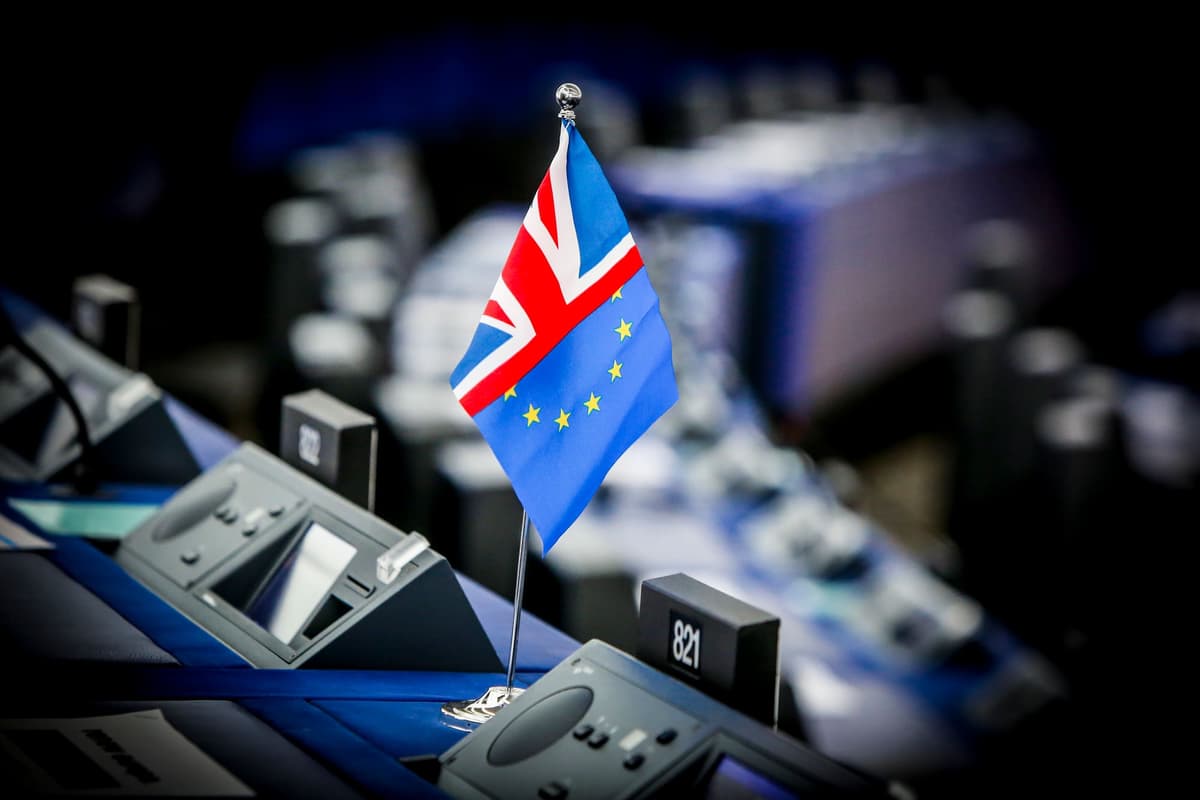
The entire European Parliament will vote on Wednesday on the treaty regulating the departure of Great Britain from the European Union on January 31. Votes in subcommittees last week already showed that an overwhelming majority agrees with it.
A simple majority in the vote is sufficient.
Prior to the vote, the MEPs will hold a debate with European Commission President Ursula von der Leyen. The MEPs are expected to call on the British government in a non-binding resolution to continue granting residents from other EU countries the same social and legal rights.
The British diplomat David Frost is leading the British Brexit delegation for the rest of this year to negotiate a trade agreement with EU chief negotiator Michel Barnier. Frost has been involved in the Brexit talks since last summer. Negotiations on the future relationship with the EU must be completed before the end of the year.
Promotion
The British government will be the first to introduce a law intended to end the automatic rights of fishing boats from the European Union to fish in British waters. This was announced Wednesday by the UK Department for Environment, Food and Rural Affairs.
The new legislation must guarantee that Great Britain leaves the EU's common fisheries policy by the end of this year. In the future, access to fishing in British waters will be a matter for the United Kingdom, which will determine the rules foreign vessels must follow, officials in London said.
Transporters from Northern Ireland have also reacted with concern to new revelations in the British media about the number of customs forms they will soon have to fill out. The "simple" form, according to the British government, that Northern Irish companies will need to complete when transporting goods to mainland Britain actually contains 31 fields, of which 29 are mandatory. British companies wanting to export to Northern Ireland face even more bureaucracy: 42 fields must be completed.
One of the reasons many Britons want to leave the European Union is their aversion to Brussels regulations. Due to the treaty the British signed last year with the European Union concerning trade in the Irish Sea, another British bureaucratic hassle now looms.
Northern Ireland, which is part of the United Kingdom but is physically on the island of Ireland, is leaving the EU together with the rest of Britain. However, Northern Ireland will for the time being continue to follow the rules of the European customs union to avoid a customs border between Ireland and Northern Ireland. Such a border is prohibited according to the Good Friday Agreement, which ended decades of violence on the Irish island.