

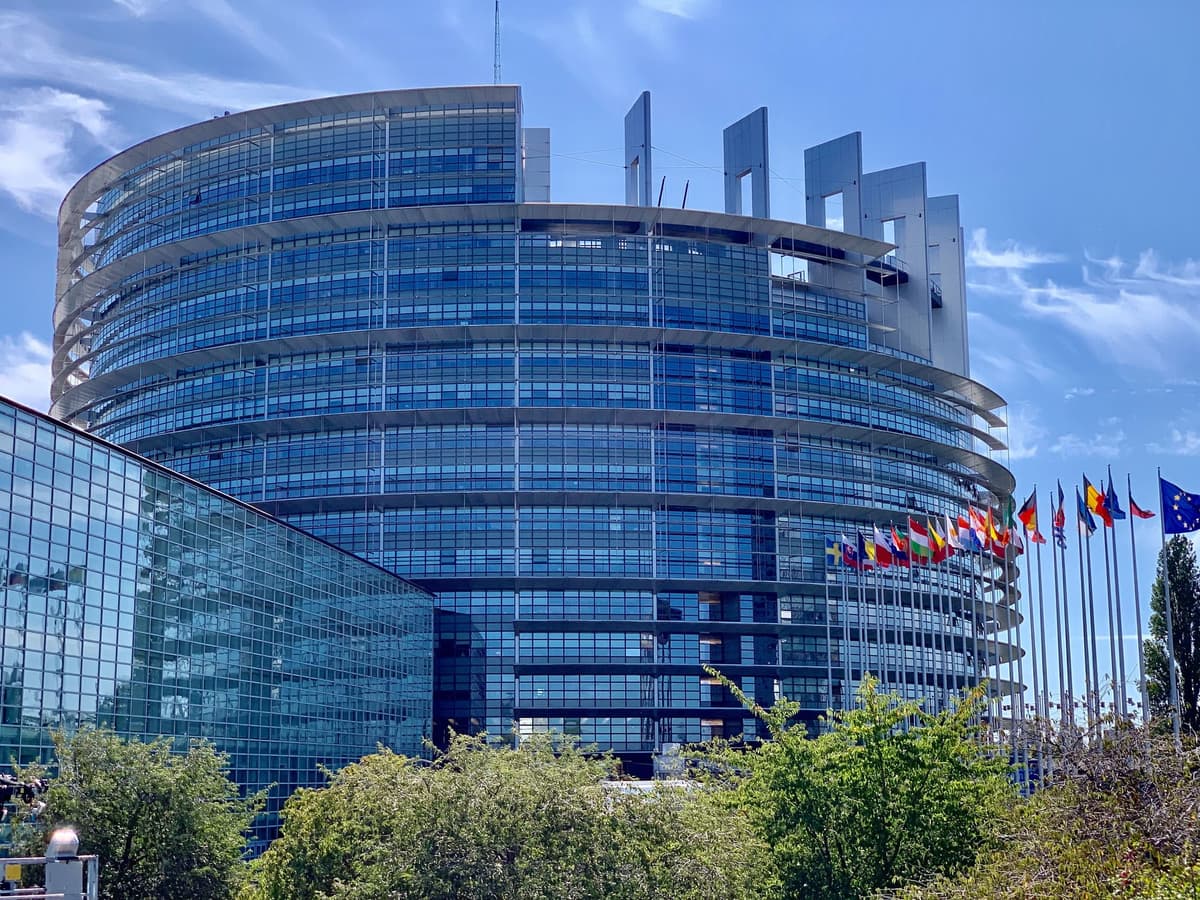
The European Parliament is threatening to block the EU multiannual budget 2021-2027, and thus also the billion-euro corona recovery fund. The multiannual budget (€1.074 trillion) and the corona recovery fund (€750 billion) form the core of a series of financial decisions that must be made this month.
The European Parliament is now on a collision course with the 27 EU heads of government and the European Commission, who had reached an agreement earlier in July at two European summits. The budgets for the Green Deal and the Common Agricultural Policy may also now be at risk.
The European Parliament demands at least €113 billion extra for the multiannual budget (2021-2027), an amount that is non-negotiable for most member states (the Netherlands foremost). Germany is currently offering an additional €9 billion and calls this a 'creative solution'.
Promotion
EU chair Germany increased the pressure yesterday on the European Parliament to quickly agree to the budgets settled by the heads of government in July. If the parliament continues to resist, those billions for corona recovery are at risk, warns the German EU ambassador.
The letter sent Wednesday represents a new step in the escalating conflict between the parliament and the EU countries. The parliamentarians showed themselves unimpressed Wednesday afternoon by the disguised German threats. Now asking for more, 'puts the entire structure at risk,' according to the ambassador in his letter.
It is already considered a breakthrough that the European Union may introduce 'own resources' (read: taxes and tariffs). According to the European Treaty, EU revenue sources (up to now?) are a matter for the EU governments (read: the heads of state).
What Germany especially resists is the parliament’s desire to include 'respect for the rule of law' as a condition for paying out EU subsidies. The MEPs want to force countries like Poland and Hungary (but also the Czech Republic and Croatia) to stop undermining their rule of law by this means.
They are supported in this by the Netherlands, Finland, Denmark, and Sweden, but other heads of government and ministers are not yet willing to confront their colleagues from obstructive countries with fines and sanctions.
Undermining the rule of law— as Hungary systematically does— cannot be without consequences in the EU. “The EU must not allow itself to be bullied by Orban and his associates,” said delegation leader Agnes Jongerius. Respect for the rule of law must become a prerequisite in the distribution of recovery funds and in the multiannual financial framework (MFF).
For now, the parliament states that it will not approve the billion-euro funds in that case, meaning they will not be available on January 1. According to the German ambassador, “Europe is waiting for an agreement” urgently needed “for our citizens, businesses, researchers, and regions.” Such an agreement should be reached next week so it can be “rubber-stamped” at a new summit of heads of state.