

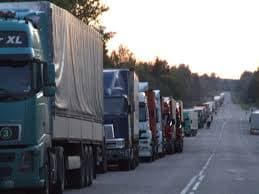
The Dutch transport organization Transport en Logistiek Nederland (TLN) demands a Europe-wide, phased lifting of the current transport restrictions due to the coronavirus pandemic. This is the only way to prevent unnecessary problems and to ensure the smooth flow of cross-border goods transport, TLN announced now.
At the beginning of this year, when the coronavirus crisis broke out in Europe, several EU member states closed border crossings or reintroduced customs checks, while others did not or acted differently. This resulted in great chaos at border crossings for international freight transport.
Dutch Transport Minister Cora van Nieuwenhuizen supports the demands of the Dutch carriers’ association. “There are currently temporary exemptions for truck drivers almost everywhere in Europe,” TLN wrote in a statement. If EU countries now each withdraw these rules individually, it will inevitably lead to problems without prior coordination between the European countries.
Promotion
TLN gives the example of a French truck driver who must deliver goods from France to the Netherlands. If he follows the exemption rules for driving and rest times currently in effect in France, he may have to pay a fine in Belgium because Belgium has stricter rules than France.
As another example, TLN cites the current option for truck drivers to drive with an expired driving license. The withdrawal of this exception must be regulated simultaneously across the EU to prevent problems with international transport. Together with other European transport organizations, TLN therefore calls on the EU countries to coordinate well on how exemptions for road freight transport are gradually withdrawn.
The European umbrella organizations of the transport and logistics sector welcome the European Commission’s roadmap for the gradual abolition of coronavirus measures. However, this must take place simultaneously in those countries, emphasize the freight forwarders association Clecat, the European Express Association (EER), and the European Shippers’ Council (ESC) in a joint letter.