

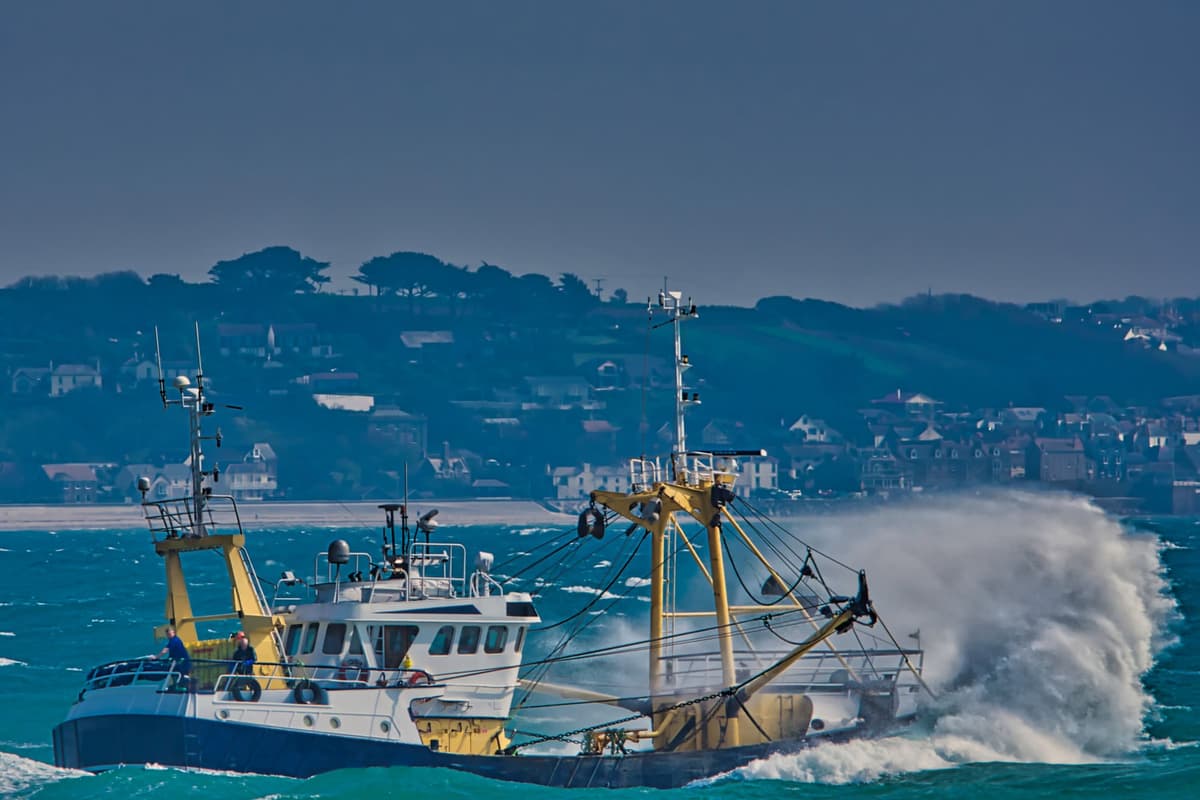
The negotiations among the ministers of Agriculture, Nature and Food Quality (LNV) on the European fishing quotas for next year have not yielded any results yet. The discussions are more or less stuck due to the lack of agreements with the British. As a result, there is also no clarity regarding permitted fish catches in the Mediterranean Sea and the Atlantic Ocean.
Because the British have left the EU, and there is (still?) no British-European trade agreement, starting January 1st, European fishermen lose the right to fish in the British part of the North Sea.
Fisheries is one of two issues on which British and EU negotiators are still trying to reach a compromise in their efforts to conclude a free trade agreement before the end of the year.
Promotion
An initial compromise proposal from the German presidency of the EU Council, according to diplomatic sources in Brussels, did not bring an agreement within reach. Therefore, the European Commission has only proposed a continuation of the current quotas for the next three months. But this also requires the approval and cooperation of the British. Given the stalled negotiation situation over a trade agreement, this is far from certain.
If a three-month transition is agreed with the British, the consequences for Dutch fishermen will remain limited for the time being. It will be different if fishing rights in British waters largely or completely expire on January 1st. In that case, Dutch fisheries will be severely affected. Dutch fishermen catch 60 percent of the fish in the UK's exclusive economic zone.
The issue concerns, among other things, the extent to which fishermen from the EU have access to the United Kingdom's 'exclusive economic zone' and how much fish they are allowed to catch there. The exclusive economic zone is a maritime zone extending 370 kilometers from the coast of a country in which that country has rights to the fish and resources present.
With about 0.1 percent, the fisheries sector's share in the British economy is negligible. Yet, the fisheries issue plays an important role in England in the emotional anti-European “Take Back Control” message of the Brexit campaign. Many British fishermen also believe their sector has shrunk in recent years due to the UK's EU membership and ‘allowing’ Dutch, Danish, German, Belgian, and French fishermen.
European fishermen threaten to block the port of Calais and stop ferries carrying British goods to the European Union next year if they are no longer allowed to fish in British waters. Calais is the most important transport port for British-European goods traffic.
France, Belgium, and the Netherlands would be the hardest-hit EU member states if no new trade agreement is reached with Boris Johnson's British government before the end of the Brexit transition period.