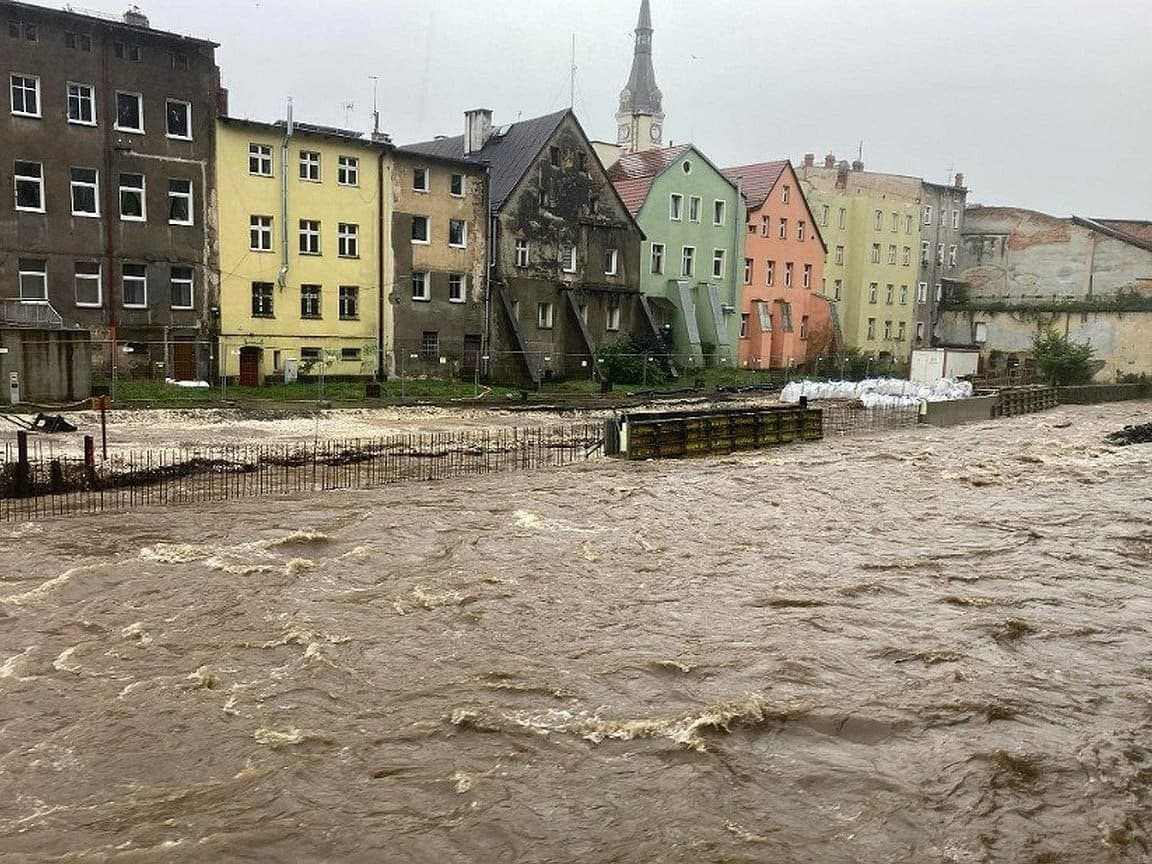
Thousands of Red Cross volunteers in Austria, the Czech Republic, Moldova, Poland, and Romania are working around the clock to meet the needs of affected people. Recent days of downpours have caused massive flooding in these countries, resulting in flooded homes, power outages, transport disruptions, and damaged infrastructure. Hungarian Prime Minister Orbán has postponed a planned visit and speech at the European Parliament until October. In Poland, Prime Minister Donald Tusk has declared a form of state of emergency.
The European Parliament in Strasbourg is expected to discuss on Wednesday or Thursday a potential aid operation for the affected regions. Initially, EU politicians had only scheduled compensation for farmers for damages they suffered earlier this year due to heavy rain and early frost. However, the scale of the current, much larger disaster is prompting Brussels to take new measures.
There is not yet a clear picture of the extent of the flood disaster and the financial damage. So far, most reports come mainly from cities and villages, while an overview of rural areas is still lacking. The rivers in Central Europe that have overflowed their banks mainly rush through low-lying built-up areas along narrow streets, but in slightly higher countryside entire meadows and fields are submerged under (polluted) river water.
The TV footage of the current wild rivers shows many similarities to the floods that struck parts of Germany and Belgium a few years ago, extending to Valkenburg (Netherlands).
"Since Europe is warming much faster than the rest of the world, we face a possible future in which such floods will no longer be called historic but frequent or even annual events. We must brace ourselves to adapt to this new reality," says Andreas von Weissenberg, Head of Health, Disasters, Climate, and Crises in Europe at the International Red Cross.
One of the hardest hit areas is Lower Austria, where 1,750 people have had to leave their homes and move to temporary shelters. Many of them experienced a similar crisis during the 2002 floods and are now afraid of losing everything again.
In the Czech Republic, a dam of a reservoir has broken, and in Poland a city of 40,000 inhabitants must evacuate. The mayor has urged residents to go to the attic floor.
In eastern Romania, the floods have already claimed six lives. In the hardest-hit provinces of Galati and Vaslui, more than 5,000 houses have flooded and hundreds of people evacuated. The Romanian Red Cross has distributed 20 tons of food and drinking water and has made a call for donations to support the affected population.
Other countries in the region, including Germany, Hungary, and Slovakia, remain on high alert, with Red Cross teams working alongside local authorities and ready to respond. Water levels — especially in the Danube, the Elbe, and the Oder — are expected to peak during the course of the week.
Climate scientists say they are concerned about the damage but not surprised by the intensity. However, scientists are cautious about attributing the extreme rainfall directly to human influence because many factors affect the water cycle. While it is well known that warmer air can hold more moisture, it also depends on how much water is available.
According to Sonia Seneviratne, climate scientist at ETH Zurich, direct analyses of the floods in Central Europe showed that most of the water vapor originated from the Black Sea and the Mediterranean Sea. Both areas have warmed due to human-caused climate change, leading to more water evaporating into the air.
"On average, the intensity of heavy precipitation events increases by 7% for every degree of global warming," she said. "We now have 1.2 degrees Celsius of global warming, which means that heavy precipitation events are on average 8% more intense."