

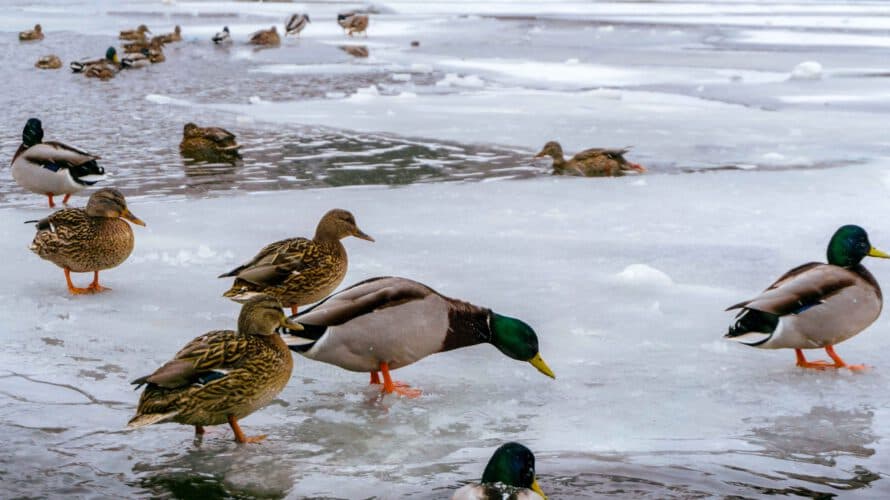
France has started a trial vaccination against avian influenza HPAI. If the trial is successful, the results will be submitted to the European Union. The agriculture ministers will then have to decide whether vaccination will be permitted. This could happen at the earliest next year.
Two tests will be conducted under agricultural conditions at a trial farm on two groups of ducks, with two different vaccines. First, a trial will be carried out on a small group of animals, followed by a large group.
Two vaccines will be tested: one produced by the French company Ceva, the other by Boehringer Ingelheim. The study involves collecting data on their ability to "protect waterfowl and reduce the shedding and spread of the virus." The trial will be conducted under the supervision of veterinarians, the national veterinary school of Toulouse, and French government agencies.
Promotion
The trial will later be expanded to about ten farms, according to sources from the French ministry. If the conclusions are favorable, vaccination would in any case only be possible in 2023, they emphasized. Incidentally, France simultaneously announced that the confinement obligation and transport bans are being lifted "due to favorable conditions" in large parts of the country, except in the most affected western provinces.
Current EU rules prohibit the export of vaccinated poultry due to the risk that they could be carriers and transmitters of the avian influenza virus. Moreover, EU countries would need to initiate negotiations with third countries where birds and poultry are exported in the event of EU-wide vaccination.
Within the European Commission, there are several departments responsible for the Internal Market and Animal Health that have differing views on how to approach avian influenza. The Netherlands favors vaccination so that chickens do not have to be confined or culled if infected. Dutch Agriculture Minister Henk Staghouwer has called for this several times, as has the French Minister Julien Denormandie.
The Netherlands has the support of ten other countries to address the issues. Exactly what the solution will be is difficult to predict, as the European Commission must come forward with proposals. The Netherlands wants the criteria for free-range eggs in the poultry industry to be relaxed. Currently, an egg may be labeled free-range if the hen can also go outside. However, due to confinement rules because of avian influenza, chickens must remain indoors, so strictly speaking, the eggs are no longer free-range eggs.