

France will hold the presidency of the European Union for the next six months. This temporary presidency will primarily focus on the Future Conference concerning the modernization of the EU's budget and procedures.
Moreover, French President Manuel Macron aims to significantly expand the EU's international economic portfolio, a plan that not all EU countries warmly support.
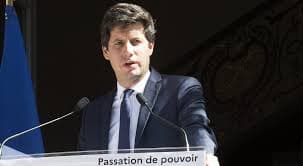
Following recent decisions on the new Common Agricultural Policy (CAP), hardly any new major decisions on agriculture are expected under the French presidency. However, French Minister of Agriculture Julien Denormandie must begin implementing the first farm-to-fork measures, while mainly ensuring that Commissioner Janusz Wojciechowski does not move too hastily.
Promotion
The most favorable change for agriculture is expected from new trade agreements. France wants protection against imports of (cheaper) food not produced according to European (environmental) standards. With the principle of reciprocity for imports and domestic production, France intends to prevent environmental and climate laws in the EU from weakening the competitive position of EU farmers in the future.
Denormandie warns that the Green Deal must by no means result in production shifting out of the EU. There is broad consensus in France that the domestic beef market must be protected and that the free trade agreement with the South American Mercosur countries should therefore not enter into force.
The new French presidency also plans to place the import of deforestation-free soy, palm oil, and beef on the agenda, but it is unlikely that EU Environment Ministers will adopt a common position on this in June. Furthermore, Environment Ministers will also discuss the strategy for soil protection, but no decisions are expected since opinions among EU member states still strongly diverge.
The trade agreements currently being negotiated with New Zealand and Australia will likely face French reservations due to competition for animal products in France. According to the French viewpoint, consuming local products is a patriotic duty.
France therefore wants to replace soy imports with increased soybean cultivation within the EU. Higher food imports, especially of vegetables and fruit, are also a major problem in France. The country has more than doubled its food imports over the past twenty years.
Food self-sufficiency is of strategic importance in France. For the French, food self-sufficiency is a matter of national independence and a sign of a country’s political strength.