

France holds the presidency of the European Union for the next six months. This temporary presidency will mainly focus on the Future Conference concerning the modernization of the EU budget and procedures. Additionally, French President Emmanuel Macron aims to significantly expand the EU's responsibilities in international economic matters.
Following recent decisions on the new Common Agricultural Policy (CAP), hardly any new far-reaching decisions in agriculture are expected during the French presidency. However, French Minister of Agriculture Julien Denormandie must begin implementing the first farm-to-fork measures, while primarily ensuring that Commissioner Janusz Wojciechowski does not move too hastily.
The most favorable change for agriculture is expected from new trade agreements. France seeks protection against the import of (cheaper) food not produced according to European (environmental) standards. With the principle of reciprocity for import and domestic production, France intends to prevent environmental and climate laws in the EU from weakening the competitive position of EU farmers in the future.
Promotion
Denormandie warns that the Green Deal must not lead to the relocation of production outside the EU. There is broad consensus in France that the domestic beef market must be protected and that the free trade agreement with the South American Mercosur countries must therefore not come into effect.
The trade agreements currently under negotiation with New Zealand and Australia will likely face French objections due to competition for animal products in France. In addition, Paris wants to replace soybean imports with more domestic soybean cultivation within the EU.
Within a few years, France has dropped from the world's second-largest agricultural exporter to sixth place. Among EU member states, especially the Netherlands and Germany have overtaken France in exports. Changes in consumption and consumer behavior, as well as supermarket pricing, are seen as major causes of the problem. Food plays a smaller role in the daily life of many French people than in the past. There is also an increasing tendency toward cheap products.
Minister of Agriculture Denormandie is considered a close confidant of President Emmanuel Macron. He has been part of the new "En Marche" movement from the start and organized Macron's 2016 election campaign. His difficult task of keeping the troubled French farmers in line has been more or less successful so far. Recently, he was cheered in Paris by sugar beet growers for extending the exemption on neonicotinoids for them.
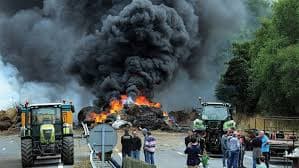
Despite his verbal and political commitment to environmentally and climate-friendly agriculture, Denormandie often adopts a more pragmatic approach in individual cases. French farmers who quickly and militantly take to the streets and the powerful regional agricultural associations put pressure on him quickly.
And in the upcoming presidential elections in April, voters in rural areas must not be lost to the Republicans under any circumstances. Therefore, French farmers must not be angered over European agricultural issues in the coming six months…