

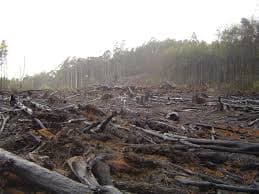
France will make tackling 'less imported deforestation' a major focus during its upcoming six-month presidency of the European Union. This phrasing opens up more possibilities than the recent wording used by the European Commission, also allowing import restrictions on rubber and soy products.
So far, the European Commission has only mentioned import restrictions on soybeans, beef, palm oil, timber, cocoa, coffee, and certain derived products (leather, furniture, etc.) if they affect the rainforest.
“This regulation is very ambitious; we will make it a priority for the French presidency of the European Union,” announced Bérangère Abba, Secretary of State for Biodiversity, last weekend.
Promotion
In 2018, France pledged to end global deforestation linked to the import of certain products, such as beef and beef products, by 2030.
France is “one of the first countries to have implemented equipment and techniques to detect products and risk areas,” Abba added. “This required satellite technologies; we have them and can now combine them with anonymized customs data.”
Specifically for the soybean sector, a website (www.deforestationimportee.fr) has been developed in collaboration with environmental organizations for French consumers to monitor direct imports from Brazil. This will later be extended to other countries, according to the ministry.
The aim is “to provide transparency to end users of soybeans, transporters, or manufacturers, to guarantee consumers that the product they purchase does not contribute to deforestation,” it was said.
Food chains like Carrefour, Auchan, Lidl, and manufacturers such as Herta or LDC have signed a manifesto to take action against “imported deforestation linked to soybean cultivation.”
During the recent presentation of the European Commission’s strategy, environmental organizations lamented that it does not yet address maize or rubber, and applies only to vulnerable forests, not yet to savannas or wetlands that have also been destroyed for agricultural purposes. The EU strategy still needs to be approved by the European Parliament and the EU member states in the coming six months.