

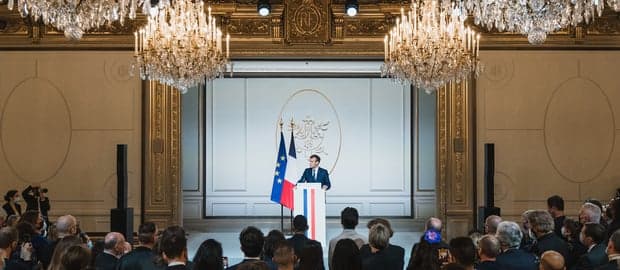
President Macron reiterated his doctrine on agricultural policy during the presentation of his ecological strategy: no excessive conversion of European regulations, no new restrictions without an ‘equivalence clause’ for imports, no ban on phytosanitary products ‘without solutions’.
France struggles to reduce emissions from agriculture, which is the highest of all European countries, and from transport. In 2018, the ‘yellow vests’ protest movement forced the French president to abandon a planned increase in fuel taxes. Now he is introducing, among other things, fuel discount vouchers for low-income individuals and an affordable lease contract for electric cars.
More than two billion euros of the new fund is allocated to agriculture and biodiversity, of which 500 million euros is for replanting trees and landscape elements. One billion euros has been set aside for research into alternative solutions to pesticides, Minister Marc Fresneau told the press.
Promotion
In 2022, agriculture accounted for 21% of greenhouse gas emissions in France, just behind transport (29%). Nearly half of agricultural emissions come from methane, which is directly linked to breeding and ruminating animals.
Among the announced measures, the cabinet wants to reduce the share of meat in the diet. It is estimated that 20 million tons of emissions could be avoided if half of French consumers reduced their daily meat intake.
Minister Fresneau also announced that in 2024, 2025, and 2026, an additional 10 million euros will be spent annually on promoting organic French food products, aiming to double the share of organic farmland in France by 2030. Purchases of organic products in France fell by 4.6% last year.