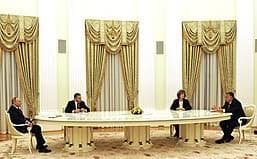
Hungary has stated that it will allow the Russian president to travel freely, regardless of the international indictment. Prime Minister Viktor Orbán said his country will not cooperate with the execution of the ICC arrest warrant.
The choice of Budapest as the location is causing division within the EU. While some EU countries are concerned about the political signal this sends, Orbán sees the summit as a diplomatic success that enhances his international profile.
Putin’s arrival is logistically complicated. EU airspace is closed to Russian planes, requiring a special exemption from one or more member states. Brussels emphasizes that the responsibility for this lies with the national authorities.
If the meeting goes ahead, it would be Putin’s first visit to an EU capital since the large-scale Russian war against Ukraine in 2022. That alone makes the gathering politically sensitive and symbolically charged.
Within NATO and the EU there is concern that a bilateral summit in Budapest could be used by Moscow to suggest international recognition. Furthermore, a summit meeting without European participation may be interpreted as a sign of weakness according to diplomats.
Orbán is seizing the opportunity to profile his country as “the island of peace.” In doing so, he positions Hungary once again between East and West, but also as an outlier within the European Union.
Meanwhile, EU institutions are examining the legal, political, and security implications of the planned meeting. Brussels is considering scenarios in which the Union might be indirectly involved through logistical support or granting access to airspace.
The European Commission is publicly remaining cautious. A spokesperson stated that any step toward a “just and lasting peace for Ukraine” is welcome, but stressed that Putin is subject to sanctions and that each EU country decides independently on exemptions.