

The planned EU law goes, according to the FDP members, much further than what is considered practical and reasonable, and they fear disadvantages for the German economy. The blockade position met with sharp criticism from SPD and Green politicians beforehand, who are already at odds with the FDP over the financing of the desired agricultural transition.
Just like in other EU countries, within the German coalition, when political disagreements arise, ministers abstain from voting on EU decisions. Because Italy also abstained at the last moment in Brussels, the proposal did not reach the required two-thirds majority.
Due to the blockade in Germany, the approval of the European supply chain law is temporarily halted. As a result, it is uncertain whether the directive can be adopted before the European elections in early June. The Netherlands already has, like some other EU countries, a due diligence scheme as part of the Corporate Social Responsibility law, but this is (so far?) limited and voluntary.
Promotion
Since 2023, Germany has had a national law in effect that requires large companies to ensure compliance with international standards regarding human rights and the environment within their own supply chains. The EU law would apply to companies with 500 or more employees, including those without headquarters in an EU member state but generating significant revenue within the EU.
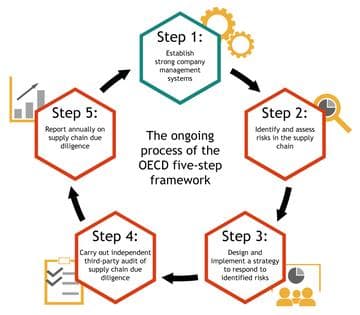
Under the 'due diligence rules,' companies must not only assess their own actions regarding human rights and environmental and climate impacts but also those of their (raw material) suppliers and customers. Violations can also result in fines.
Smaller companies with at least 250 employees would have to comply if 20 million euros of their revenue comes from the textile industry, agriculture and food production, or the extraction and processing of mineral resources.
Thus, for instance, food processors would not only have to check whether their suppliers of potatoes, onions, or sugar beets comply with EU pesticide regulations but also whether their customers pay the statutory minimum wage.