

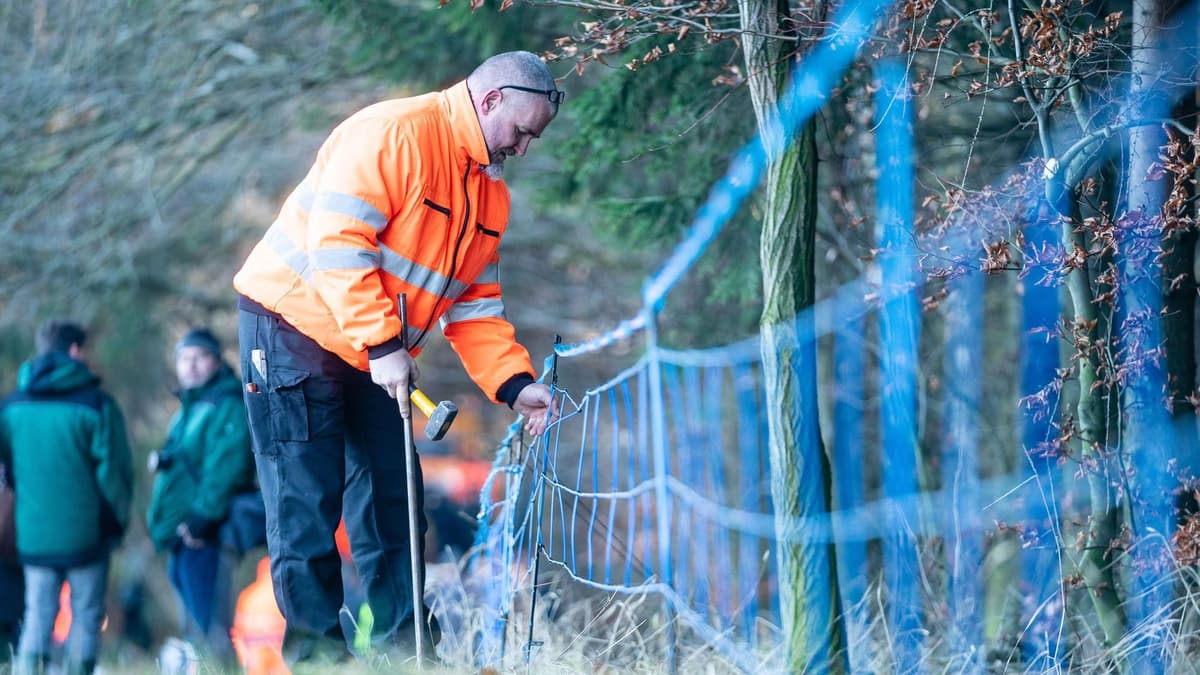
The German states want European subsidies for the construction of additional fences along the Polish border to prevent further spread of African swine fever. Despite the construction of hundreds of kilometers of fencing, infected wild boars are still entering Germany.
Already, double rows of fences are being installed in some areas. Nevertheless, a year after the first case appeared in Germany, more than two thousand infections have now been detected.
On Wednesday, the agricultural ministers of the states urged Federal Minister Julia Klöckner and Chancellor Merkel in an emergency video conference to request additional support from Brussels.
Promotion
The spread of swine fever from Poland to western and southern neighboring countries is becoming a European problem, according to the states.
Other states have also offered to contribute financially to the construction of fences at the eastern border. Until now, this has been the responsibility of the three eastern states Mecklenburg-Vorpommern, Brandenburg, and Saxony. They are currently doing everything possible to prevent the epidemic from spreading further west.
To ensure a future for pig farming in Germany, the federal and state governments must combat swine fever with full consistency. The fight against ASF is a task for society as a whole, it was said.
The German Farmers' Association (DBV) calls for an even stronger fight against the epidemic. Despite monitoring and containment measures, the epidemic pressure from the constant migration of wild boars from Poland into Germany remains high, the DBV announced. ASF is spreading along the border to the north and south. More than 2000 cases have now been confirmed by the Friedrich Loeffler Institute (FLI).