

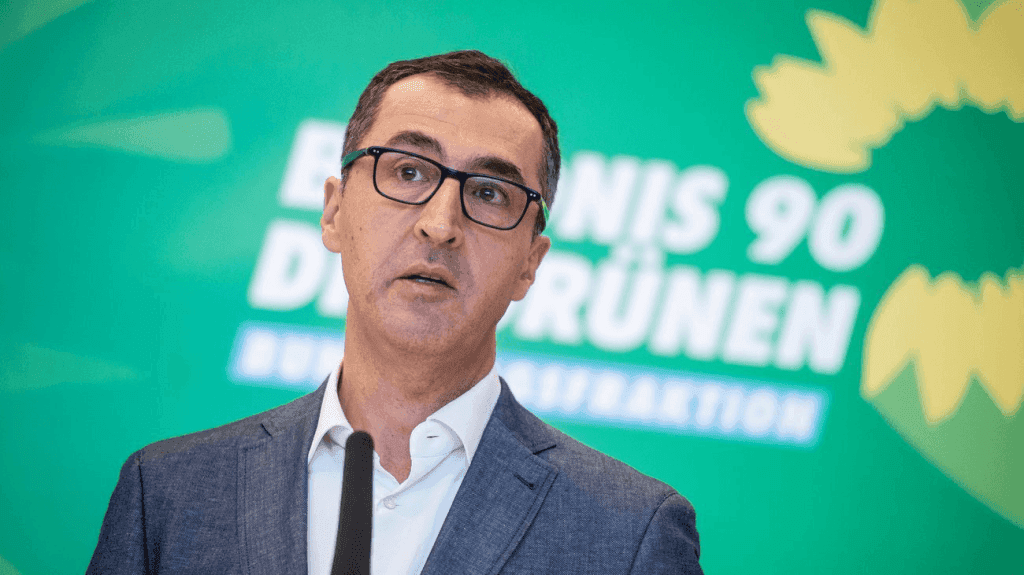
German Agriculture Minister Cem Özdemir has relaxed the environmental criteria for certain ‘ecological priority areas,’ allowing corn and grain for animal feed to be grown there this year. In total, this concerns more than one million hectares.
The measure is part of a ten-point plan Özdemir announced on Friday in response to uncertainty among German farmers. To offset the additional costs for animal feed, German farmers should be able to use extra land, as previously advocated by the German Farmers’ Association (DBV).
As an initial support for German farmers, certain areas will be released this year for feed production. Normally, grass and other plants must be plowed under these areas to improve the soil, and the land cannot be used for cultivation.
Promotion
Additionally, Özdemir will advocate at the EU level for exceptions for organic farms, so that they are not required to use 100% organically produced feed for their animals, as prescribed by the new organic regulation.
A large part of Germany's agricultural land is not used for food production for humans, but for animal feed. Özdemir stated that the supply of food in Germany is guaranteed. Anyone claiming otherwise acts against the facts and is politically irresponsible, he said.
DBV Chairman Rukwied welcomed the decision: “We see these measures as the first real steps to support us. In addition, like the rest of the economy and the transport and logistics sectors, we are very concerned about the soaring energy and diesel costs. We need to find a way to relieve agriculture in this regard.”
The war in Ukraine has, just like in the European Union, also prompted discussions about the direction of agriculture within Germany's ‘traffic light coalition.’ Liberal FDP parliamentary leader Carina Konrad demanded ‘that food security must now be central again in agricultural policy.’
Among other things, the new EU agricultural policy, including the Green Deal and Farm to Fork strategy, should be postponed. Similar demands have also come from the CDU and CSU in recent days. However, Özdemir and other Agriculture Ministers want to accelerate it instead.