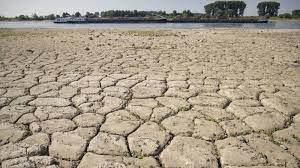
In the European Union, heat and drought continue to grip primarily the southern EU countries. In France, calls from agricultural circles for government support are growing louder, while in Spain, grape harvesting started two weeks earlier than usual. The United Kingdom is also currently experiencing its driest summer in more than 50 years.
The French farmers' association FNSEA has called on Agriculture Minister Marc Fesneau to relax the requirements for sowing cover crops. Due to formalities, French farmers are not allowed to decide this themselves. The association also urges the earliest possible payment of aid or advances to counter liquidity problems.
The drought in France has now led to unexpected consequences. In several parts of the country — during the busy holiday period — swimming bans had to be imposed after high water temperatures caused a proliferation of harmful blue-green algae.
French meteorologists expect the current heatwave to end in a few days with thunderstorms. However, this will not immediately improve the parched soil because most of the rainwater will flow away directly.
Spain reports the warmest July since measurements began in 1961, with an average temperature of 25.6 degrees Celsius. Rainfall was less than half of normal.
The situation is particularly bad in southern Andalusia, where reservoirs hold only a quarter of their usual water levels. Surface and groundwater have also decreased. Most Spanish vegetables and fruit are grown in Andalusia. Agriculture uses about 80 percent of the water resources.
Spanish farmers fear a decline in sunflower yields per hectare of up to 40 percent. According to the Asaja farmers' association, the production volume will only decline slightly because the cultivation area was significantly expanded this year as a result of the war in Ukraine.
For winter cereals, the harvest in Spain has already been 30 percent smaller, and corn production is expected to be halved. Olives, avocados, and citrus fruits have also suffered major damage. Winemakers tried to save the harvest by bringing it forward. Asaja estimates the total drought damage to agriculture at more than 8 billion euros.