

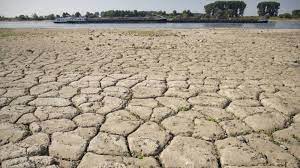
The severe drought that has been affecting European countries since the beginning of this year expanded and worsened further in August. According to a new EU report, 17% of Europe now falls into the highest category for drought damage, significantly more than the 11% reported in July.
Increasing "drought risk" is now predicted for large parts of Italy, Spain, Portugal, France, Germany, the Netherlands, Belgium, Ireland, Luxembourg, Romania, and Hungary.
According to agricultural insurer Verenigde Hagel, the drought is also causing "serious" yield losses in Belgium, the Netherlands, and Luxembourg, especially in corn and grassland. Feed reserves are dwindling, and additional purchases will probably be necessary starting in autumn. There have already been numerous reports of drought damage with an insured amount of around 50 million euros, Agra-Europe reports.
Promotion
In France, Prime Minister Elisabeth Borne has imposed watering bans in parts of the country. Further measures have been taken to secure the drinking water supply. Depending on the extent, water withdrawal for agricultural purposes is limited or banned, despite protests from French farmers who see this as conflicting with food sovereignty.
Spain is also suffering from the ongoing drought and has now restricted water use in many parts of the country, although agriculture is not directly affected. The Spanish farmers' association recently reported drought-related problems in the cultivation of sunflowers and grains, stone fruits, and olives. Livestock farming is already struggling with drinking water supply. Many agricultural businesses are only supplied with water by tanker trucks.
In Italy, the situation remains tense. The yield of soft wheat in the Po Valley was 40% below the usual level. Agricultural umbrella organization Coldiretti expects grain production to fall by about 30%, and corn losses could even reach up to 45%. Italian milk production has also decreased by an average of 20% due to the heat.