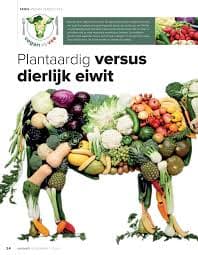
Dutch people eat less meat and more vegetarian food than inhabitants of most EU countries. A recent European study shows a further shift towards plant-based eating across the entire EU. The Dutch appear to be leading when it comes to their interest in reducing meat and eating plant-based.
For the protein study commissioned by ProVeg and conducted by the universities of Copenhagen and Ghent, 7,500 EU residents were surveyed.
Almost half of European consumers (46%) say they have reduced their meat consumption in the past year. Nearly 30% plan to consume significantly more plant-based dairy and meat products.
One in three Dutch people (32%) uses plant-based milk at least once a week, and 9% even daily or multiple times a day. Plant-based meat (31% at least once a week) and plant-based yogurt (27% at least once a week) are also consumed a lot.
The Netherlands has the highest percentage of self-declared flexitarians at 42%. On average, this figure is 30% in other countries. The percentage of vegetarians in the Netherlands is high (7%, of which 5% are vegetarian and 2% vegan). Only Germany and the United Kingdom surpass the Netherlands (both at 9%).
Thus, the Netherlands also has the lowest percentage of consumers who describe themselves as 'meat eaters,' namely 48%. The European average is 61%, with the highest percentage measured in Poland (68%).
According to ProVeg Netherlands, this study proves that plant-based eating is not just a passing fad for many people: The main reason for not eating even more plant-based products is primarily the price. More than half of those surveyed (55%) find plant-based products too expensive. At the same time, 44% of respondents find meat too expensive to eat every day.
Furthermore, Dutch people are less willing than other Europeans to pay more. Still, 20% of the Dutch indicated that they are indeed (or even very) willing to pay more, and 30% were 'moderately' willing to do so. The willingness was highest in Germany, Spain, and Romania.