

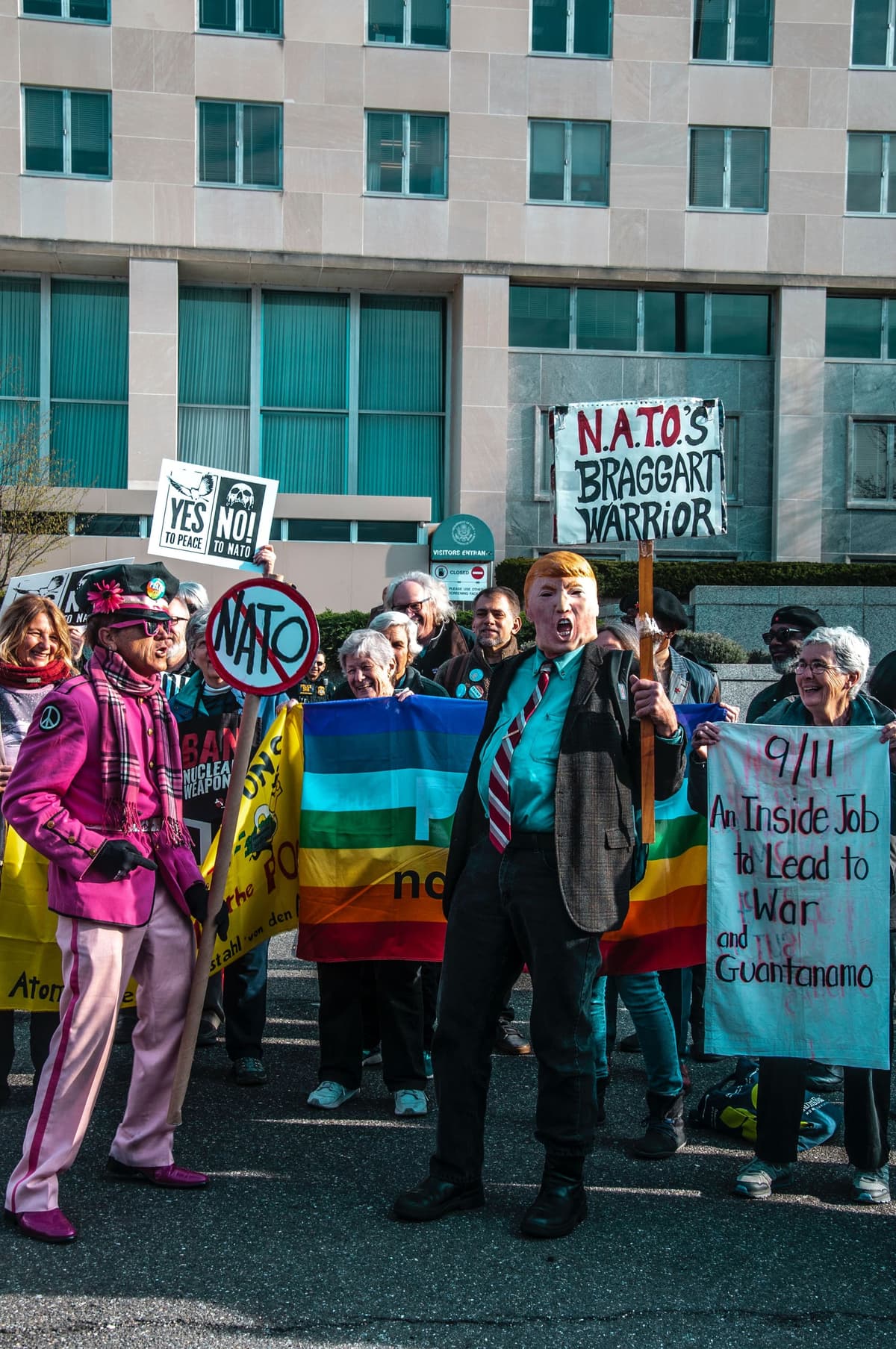
According to French President Emmanuel Macron, NATO is “brain-dead.” He believes that European countries can no longer rely on the United States to defend them. Macron also expressed doubts about NATO's Article 5, which prescribes ‘collective defense’ and regards an attack on one NATO member as an attack on all members.
NATO only works if the certainty of the ultimate recourse functions, Macron said. On the eve of the NATO meeting in Brussels, Macron stated that the European NATO countries must reconsider the commitment of the United States. According to Macron, the decision by U.S. President Donald Trump to withdraw American troops from Syria without consulting his European allies is a sign that the U.S. ‘has turned its back on us.’
In an interview with the British weekly The Economist, Macron warned European countries that they can no longer rely on the United States to defend NATO allies. Europe stands on the “edge of an abyss,” he said, and must start viewing itself as a geopolitical power. The French president said it was high time Europe ‘woke up.’
Promotion
Macron criticized the recent inability of NATO countries to respond to Turkey’s offensive in Syria and said it was time for Europe to stop behaving like a U.S. ally when it comes to the Middle East.
Because if President Trump is no longer willing to deploy American troops to defend Europe, then the alliance makes no sense, Macron reasoned. This suits France well. Two years ago, President Macron launched old ideas for an independent, France-led credible European defense. The recent doubts about the American security guarantee for Europe, and thus the credibility of NATO, give Macron’s ideas new urgency.
Moreover, Trump’s ‘America First’ policy provides Macron with a compelling argument to transform the European Union into a fully-fledged military player. However, the costs are enormous and, by EU standards, practically unaffordable. For years there have been talks about a common EU defense policy, but so far it remains the domain of the ‘Atlantic’ alliance. But if Trump withdraws to the American continent, and if the British withdraw from the European continent, new geopolitical relations arise, as many experts and analysts also claim.
The biggest problem for advocates of a European Defense policy is the fact that the 27 EU countries absolutely disagree among themselves on a common foreign policy or international policy, let alone on deploying a European peace mission or a European army. More strikingly, many European countries and politicians increasingly prioritize their own national interests.
On Wednesday at their headquarters in Brussels, NATO countries commemorated the fall of the Berlin Wall in 1989. NATO ambassadors marked the 30th anniversary of the symbolic end of the Cold War and the division of Germany. This paved the way for many Eastern and Central European countries to join the European Union and NATO. But thirty years later, many commentators say there is hardly any reunification or renewal of Europe; rather, there is new national fragmentation and division, especially at the southern and eastern fringes of the European Union.
The fall of the wall on November 9, 1989, will also be commemorated on Saturday in Berlin. Numerous dignitaries will attend the ceremony, including host and mayor Michael Müller and German President Frank Walter Steinmeier.