

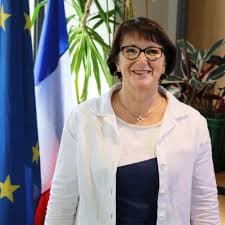
The new European food policy must be revised if an impact assessment shows it has negative consequences for farmers, says the new chairwoman of the European agricultural umbrella group COPA, the French Christiane Lambert.
In an exclusive interview with Euractiv, she accepted the need to align agriculture with environmental goals and supported the Farm to Fork strategy, but warned against ‘dogmatic’ targets in the Green Deal strategy.
First elected in 2017 as the first woman leader of the French farmers’ union FNSEA, she was also appointed last week as chairwoman of COPA. As a livestock farmer with more than 19 years of experience to her name, Lambert has been a strong advocate for agriculture from a young age.
Promotion
According to her, it is necessary to link the F2F (Farm to Fork) targets to the capacity of the market. “For example, if the Green Deal strategy states that 25% of agricultural land must be used for organic farming: will European citizens then also eat 25% organic food production?” she asked.
Lambert regretted that no impact study on future consequences was conducted prior to the presentation of the strategy. “No decision can be taken without an impact assessment. And if negative aspects emerge, they must be revised,” she added.
A similar remark was previously made by Agriculture Commissioner Janusz Wojciechowski, who opened the possibility to revise the ambitious F2F targets at a later stage if food security is threatened. “If it turns out that this strategy threatens both food security and the competitiveness of our agriculture, then these targets should be revised,” he said in July before the French Senate.
The newly elected COPA chairwoman defended the EU’s principal agricultural subsidy program, the Common Agricultural Policy (CAP), against attacks, particularly from environmental groups. She voiced her disappointment that ‘agriculture’ was not mentioned last week in the first State of the Union speech by Commission President Ursula von der Leyen. Lambert said she plans to produce her own annual “State of the Agricultural Union” going forward.
To cope with the uncertainties that trade brings, Lambert was clear that agriculture must be central in international trade agreements. Inspired by former Trade Commissioner Phil Hogan, she expressed her support for ‘open strategic autonomy’.
She warned that opening borders could put the EU in competition with countries that do not have the same production rules and emphasized that the EU cannot admit products from countries with which no common standards exist, she said, particularly with regard to draft agreements with Mercosur or Oceania.