

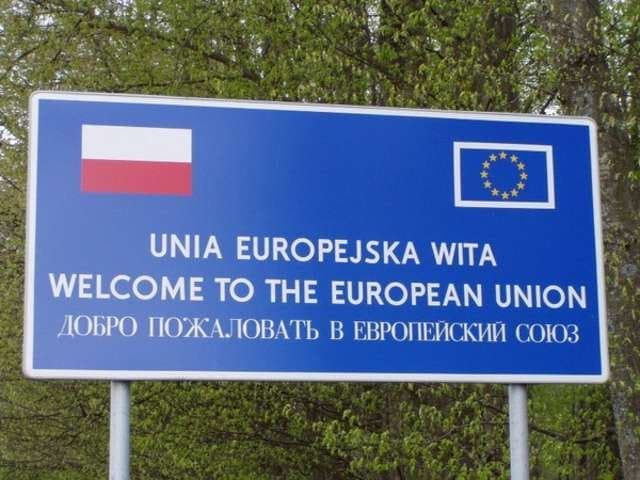
The focus is mainly on the nationalist-conservative Law and Justice Party (PiS) and its controversial anti-European stance. It is already clear that the election battle will be decided in the Polish countryside, where forty percent of the population lives.
The elections are already being labeled as a battle for the soul of Poland, with the central question of whether the PiS government can maintain its position after 9 years in power, with or without support from right-wing coalition partners. The latest opinion polls show a neck-and-neck race between PiS and the liberal coalition led by former EU president Donald Tusk, who trails the ruling party by just a few percentage points.
The ruling party is further challenged by a rising agriculturally oriented conservative faction and by the new radical farmers' party Agrounia. The agriculturally oriented conservatives have attracted attention with their promise to preserve and protect the traditional values and customs of the Polish countryside, currently polling around ten percent; Agrounia at 1 percent.
Promotion
The PiS government has lost significant support in the countryside in recent years. Critics argue that this is not so much due to dissatisfaction with EU-driven agricultural policy (although there is also much criticism of that), but mainly because the party has not sufficiently maintained its ties with the Roman Catholic Church and the traditional values and customs of rural areas.
Moreover, the government has been in several years-long conflicts with the European Union over issues such as the rule of law, judicial independence, LGBTQ+ rights, and liberal freedoms. As a result, the EU has suspended the payout of various subsidies, leading PiS politicians to also lose support among 'urban' moderate and modern voters.
A decisive turning point in these elections could still be the Ukrainian grain exports. The European Commission is considering lifting the current restrictions (no exports to five neighboring countries) after September 15, to the anger of the Polish government. This comes in the middle of the election campaign. Warsaw is threatening, if necessary, to reinstate border blockades, with which PiS attempts to win over all farmers.
It also plays a role that the Polish countryside has significantly reduced its 'lag' behind 'modern urban areas' over the past ten to fifteen years, partly with the help of European (development) subsidies and EU-supported modernization of agricultural policy. Not everyone is dissatisfied with the EU.
While the PiS government remains determined to maintain its anti-European course, the liberal coalition led by Donald Tusk has positioned itself as an alternative with a pro-European agenda. The election result could therefore have major implications for Poland's relationship with the European Union and the broader geopolitical context.