

To mitigate the financial consequences of the war in Ukraine, the French government has promised tax benefits for farmers and subsidies for energy-intensive sectors. A total of 400 million euros has been allocated for this. President Macron also wants to increase food production.
After an initial phase in February and March (of 75 million euros), an additional 175 million euros has now been earmarked for the next two months, this time also for related companies.
With this, Paris aims to support the sector currently facing a so-called scarcity effect. The agricultural sector is dealing with significantly higher operating costs (energy, feed) and a drop in pork prices. The decline in pork prices across the European Union (EU) is a result of continued high production despite a loss of sales (in China).
Promotion
France will now implement an accelerated refund of energy taxes for the entire agricultural sector, as well as an advance payment of a quarter toward next year. Additionally, the government wants to secure the supply of manure. Agriculture Minister Julien Denormandie stated that the planned tightening of storage requirements for ammonium nitrate must be postponed.
The French Farmers’ Association (FNSEA) had also requested compensation for fuel costs but this has (so far?) not been granted. However, it was announced that a third subsidy phase will follow in two months.
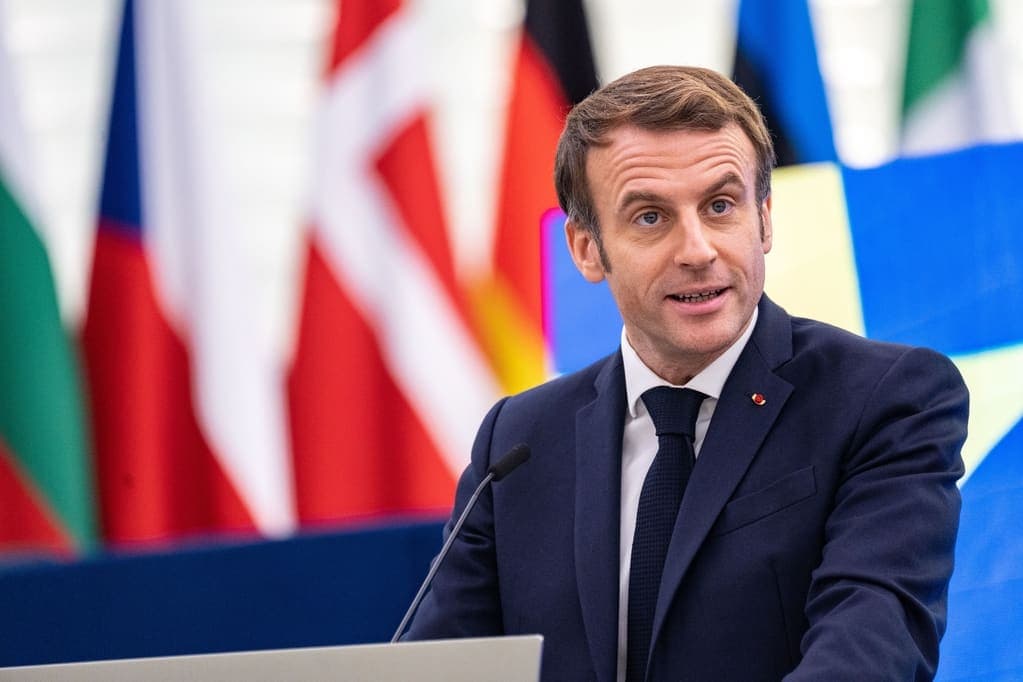
Furthermore, President Macron recently stated at the agricultural fair in Paris that he wants to further strengthen and modernize French agriculture and the food industry. In part as a response to the situation caused by the Russian war in Ukraine, Macron says there should be a new European fertilizer policy, including more organic and natural fertilizers.
He also emphasized that the Russian invasion of Ukraine will certainly have consequences for the agricultural world. In particular, he mentioned the impact on exports in key sectors such as wine, grains, and animal feed. The French government is working on a plan to absorb the economic consequences of this crisis, he said.
Macron stressed that Europe must be able to provide independently for its own food supply. During Macron’s current term, a clear shift in his agricultural vision can be observed. Initially, it focused on “producing better.”
But when the Covid-19 crisis broke out two years ago, his focus shifted to “producing more.” Since then, Macron has abandoned many of his earlier ‘greening plans’ (glyphosate ban, no GMOs, etc.). However, for now the French still (so far?) do not advocate abandoning or relaxing the Green Deal.