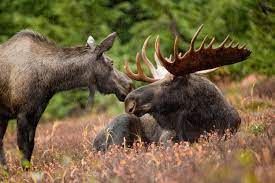
Due to hunting bans, the creation of nature reserves, and more productive agriculture, large mammals that were once on the brink of extinction are returning in large numbers across Europe. Although several animal species have disappeared, some large mammals are showing a remarkable comeback, writes Our World in Data.
According to researcher Hannah Ritchie, several species of large animals in EU countries are experiencing a spectacular comeback. The European bison, brown bear, and elk are once again thriving in European forests.
The European bison was nearly extinct due to habitat loss and hunting. However, a few dozen survived in captivity and were subsequently reintroduced into the wild by conservationists. Now, herds live again in the Baltic states, western Russia, and Ukraine. In total, there are believed to be at least 2,500 European bisons alive in Europe today—more than 30 times the number recorded in 1960.
Our World in Data bases its data on previous research by the Zoological Society of London, Birdlife International, and Rewilding Europe. These organizations studied how populations of mammals have changed since 1960. A total of 18 species were examined.
For example, beaver populations have notably recovered. In the early 1960s, there were only about 2,400 beavers; today, there are 330,000. Additionally, in fifty years the number of brown bears has doubled, elk have tripled, and red deer have increased fivefold.
The researchers cite the main causes as the cessation of hunting, the maintenance of nature reserves, and the reduction of agricultural land. Over the past 50 years, European countries have decreased the amount of land used for agriculture, allowing nature to reclaim territory.
Restricting hunting of large mammals is also important, according to Ritchie. For instance, the bear population in Sweden notably recovered after the government introduced a bear hunting quota in 1981. Sweden also implemented financial incentives to boost the reproduction of the wolverine.
Moreover, Europe, with the exception of Iceland and Norway, has banned seal hunting, which has led to a 900 percent increase in seal numbers over fifty years. There are now more than 165,000 seals in Europe. Around 1960, there were only about 16,500 seals.