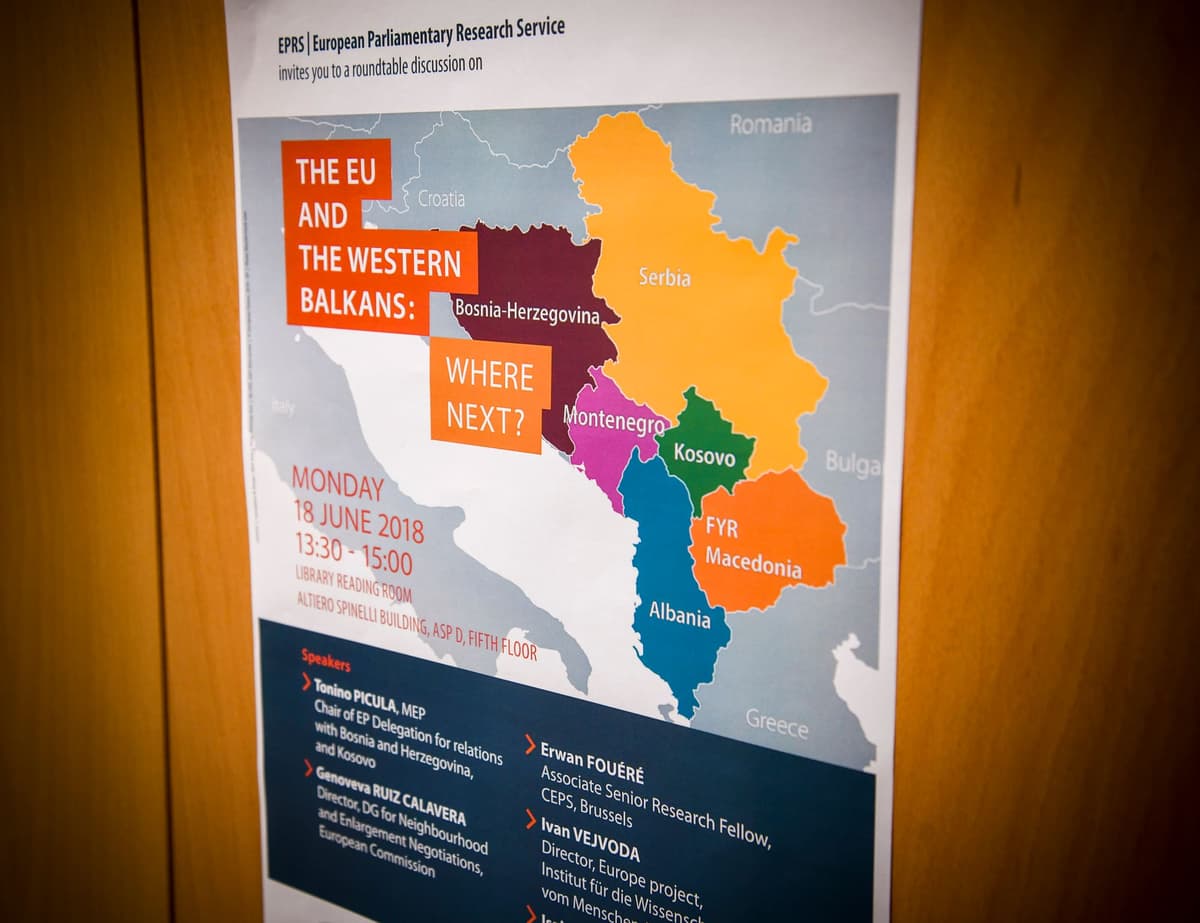
The rise of violent right-wing extremism in Southeast Europe threatens political stability in that region, especially in Kosovo, Bosnia and Herzegovina, and Serbia. This conclusion is drawn by the Dutch independent study center Hague Center for Strategic Studies (HCSS) in a report about the Balkan countries. According to the researchers, the greatest destabilization is caused by Russia.
To reduce the loyalty of the Balkan countries to the rest of Europe, Russia uses various strategies to sow discord and stir up ethnic-nationalist sentiments, it is stated. Six Balkan countries have applied for admission to the European Union, but some EU countries are hesitant about this.
According to the research, Russia exploits a sense of shared Slavic identity, particularly among Serbs. Moscow also uses the authority of the Orthodox Church to appeal to the traditional values that prevail, for example, in Serbia.
“In Bosnia and Herzegovina, for instance, Russia tries to portray Muslims as dangerous fundamentalists, encouraging Islamophobia. Similar claims are made against Muslims in Kosovo in an attempt to undermine efforts to gain international recognition as a sovereign nation,” says one of the researchers.
Anti-Western disinformation campaigns and propaganda in the media contribute to Russia's influence. Such fake information is also spread by political elites sympathetic to the Russian cause, it is argued.
The report also notes that paramilitary organizations contribute to the rise of the far right. Russia is present in the region through a Moscow-financed motorcycle gang, support for the Serbian Cossack Army, and so-called patriotic military training camps for youth.
Soldiers from the Balkans are sometimes invited to train in Russia, states the HCSS study. Many Serbs have reportedly also gone to eastern Ukraine to assist Russian paramilitary troops there.
The rise of far-right tendencies not only blocks democratic progress in these countries but can also complicate accession to the European Union, warns Rrustemi. Just last week, the parliament of North Macedonia dissolved itself and called early elections. This is eight months before the end of the current term.
The move follows the resignation of Prime Minister Zoran Zaev after the European Union refused to set a date to begin talks on actual accession to the EU bloc. Zaev called this decision a “historic mistake.”
According to most EU member states, the time is ripe for North Macedonia and also Albania to start accession talks, but especially France and the Netherlands held firm, despite concerns about increased Chinese and Russian interference in the Balkans. France believes the EU should first reform the accession process. The Netherlands believes that especially in Albania much still needs to be done against crime and corruption.