

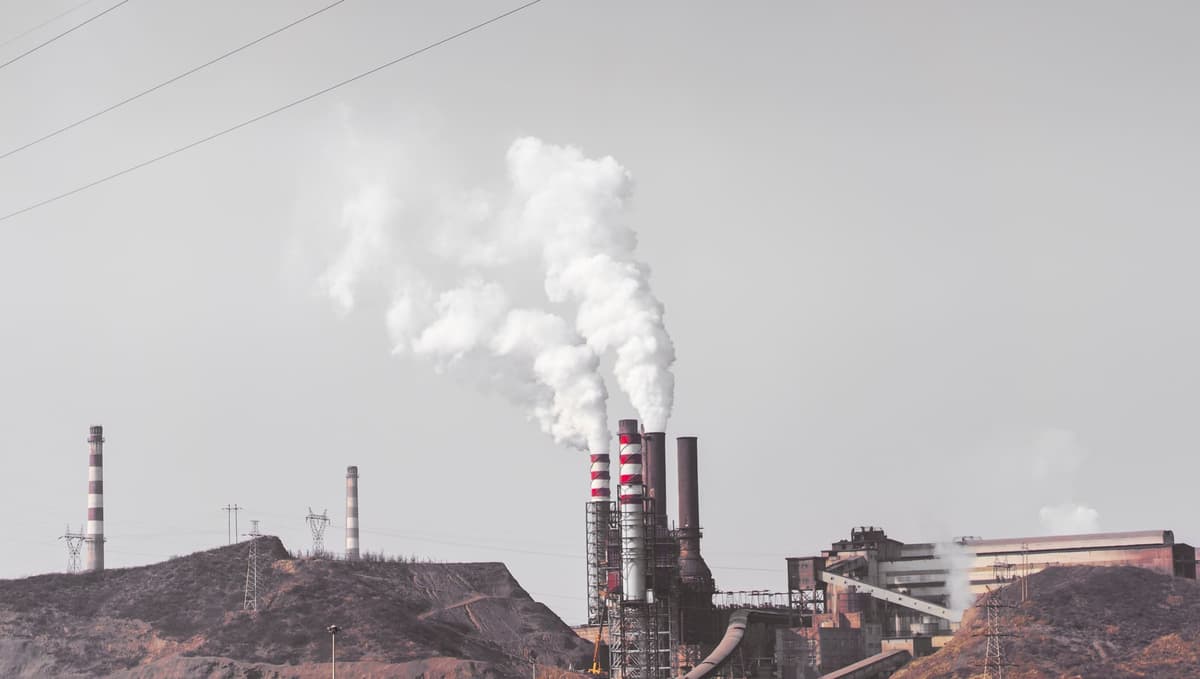
Air quality in Europe is improving, but polluted air still causes significant damage to the economy and health, especially in cities. Overall, European air is becoming cleaner, but three pollutants continue to cause major harm. The situation is worst in urban areas.
According to the World Health Organization (WHO), almost all city-dwellers breathe unhealthy air. Agriculture is seen as one of the culprits. The European Environment Agency emphasizes that air pollution is not only harmful to health but also to the economy, through “higher healthcare costs, lower yields in agriculture and forestry, and reduced productivity.”
Although the economy in Europe is growing, emissions of air pollutants and their concentrations in the air are declining, confirms the European research agency EEA based on the most recent data. According to the agency, this proves that strong policies make a difference. There is less particulate matter, ozone, nitrogen dioxide, and heavy metals in our air, which has also reduced health damage. In 2016, around 412,000 people died prematurely in 41 European countries due to fine particulate matter. Compared to 2015, that is 17,000 fewer and almost half the number compared to 1990.
Promotion
Premature deaths are mainly related to air pollution from nitrogen dioxide, ozone, and fine particulates. According to the European standard, 6 to 8 percent of the population is exposed to excessive levels of fine particulate matter. The main culprits are transport, industry, and agriculture. The latter shows the least progress but also offers the most potential for improvement. Much is expected from the new Climate Policy that Europe is working on to become fully climate-neutral and pollution-free by 2050.
An EMA map shows that air pollution is particularly high in northern Italy, Poland, parts of the Balkans. But some monitoring stations in Belgium and parts of the Ruhr area also show higher pollution levels compared to the rest of Europe.