

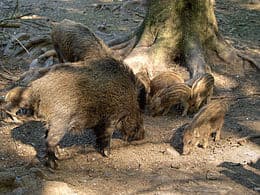
The marketing and further processing of boar liver into other food products is prohibited, according to the authority. The situation is likely similar in the other 15 German states.
PFAS comprises a large group of synthetic chemicals widely used and found in the environment, drinking water, and food. They are also called forever chemicals. "Of the relatively few well-studied PFAS, most are considered moderately to highly toxic, especially for child development," the European Environment Agency wrote earlier.
According to the state research agency, 30 liver samples and 30 other meat samples of wild boars shot in Rhineland-Palatinate were analyzed. All livers exceeded the EU-wide maximum level for PFAS.
Promotion
"The meat of wild boars, however, is harmless to health as far as PFAS is concerned," the agency states. The PFAS levels in the tested meat samples were generally well below the limit.
According to the Federal Institute for Risk Assessment, consuming just one portion of wild boar liver per year significantly contributes to PFAS intake. For people who eat this liver once per year, there is an "average risk of health problems."
The Federal Office bases its assessment on results from Schleswig-Holstein but assumes the values are not a regional peculiarity. Therefore, they could be similar in the rest of Germany.