

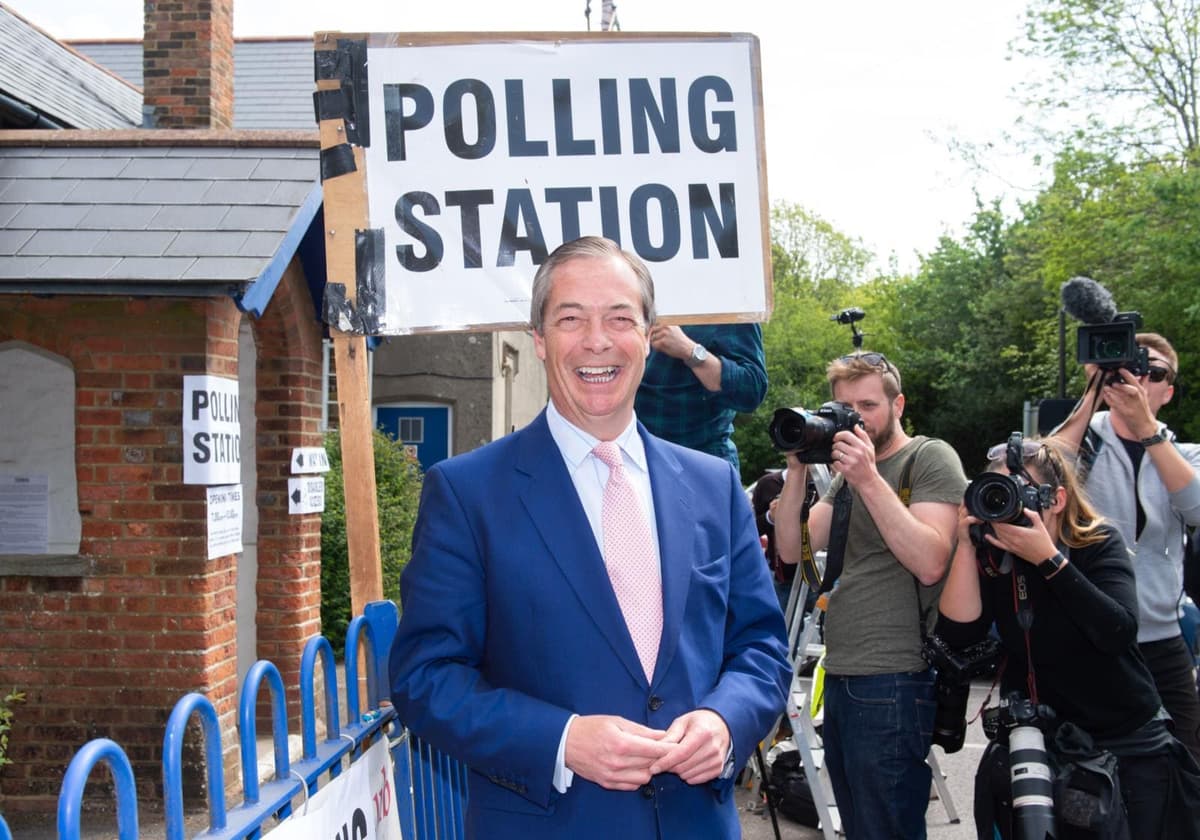
If Great Britain leaves the European Union with the current EU-UK Brexit deal, it will become much more difficult for the British to also conclude a trade agreement with the United States. This was stated by US President Donald Trump in a radio conversation with British anti-EU politician Nigel Farage of the Brexit Party.
British Prime Minister Boris Johnson has so far argued that leaving the EU actually paves the way for the British for more and better trade agreements. According to Trump, the two countries can do business much better with a 'better' Brexit deal for the British. Certain aspects of the current agreement make that impossible, said Trump. He pointed to parts of the current Brexit deal that exclude trade with the US in certain areas.
Trump's remarks are bad news for British Prime Minister Boris Johnson, who presented the commercial opportunities with the US as one of the biggest advantages of Britain's EU departure. Johnson hopes to win the election on December 12 to then finally get Parliament to approve the British EU exit.
Promotion
President Trump also expressed criticism of Labour leader Jeremy Corbyn in the radio conversation with Farage. A victory for him would be "very bad" for the United Kingdom, Trump said. The American president denied Corbyn’s claim that Prime Minister Johnson would “sell” the British National Health Service to the US to secure a trade agreement.
Labour began their campaign for the December parliamentary elections on Thursday. Jeremy Corbyn again emphasized that his party stands for higher wages, a new Brexit deal, and a second binding referendum on the UK's exit from the European Union. He wants to agree on a less far-reaching treaty with the EU, which he moreover wants to put to a referendum for approval by the public. And if that is rejected, Great Britain will remain in the EU. It is the first time Corbyn has said this openly.
If Prime Minister Johnson manages to lead his Conservative Party to a majority in the December 12 elections, a departure from the EU can be arranged within a few weeks. On the other hand, it is likely that the Conservatives will lose votes to the real anti-EU party, the Brexit Party, and that Labour will lose votes to the real pro-EU party, the LibDems. There is a good chance that after the elections no party will achieve a majority, and that a divided House of Commons will continue to block a British Brexit deal.
So far, Brexit has already cost the British tens of billions. The National Institute of Economic and Social Research (NIESR) calculated that the economy is 2.5 percent smaller due to all the uncertainty around Brexit than if Great Britain had simply remained in Europe.