

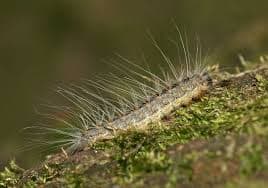
In the grain provinces in northeast China, preparations are underway for the arrival of the fall armyworm. According to American field research, the caterpillar plague has moved north of the Yangtze River and has already entered central China, three months earlier than expected.
As a result, it is very likely that the pest will also establish itself in the largest corn-producing region, the most important maize area with 45 percent of China’s annual corn harvest.
According to the China Agriculture Industry Development Report 2020, published on June 4 by the Chinese Academy of Social Sciences (CASS) and the International Food Policy Research Institute (IFPRI), FAW is estimated to reduce corn production this year by less than 2.5 percent, but other Chinese and American sources speak of twice that amount.
Promotion
The Heilongjiang Soybean Association (HAS) issued a warning at the end of May that the advancing fall armyworm caterpillar plague will cause damage to corn crops. In technical terms, the caterpillar is described as the fall armyworm (FAW). The caterpillars were discovered in March in the Chinese provinces of Jiangsu and Anhui, and subsequently in April and May along the Yangtze River.
Based on experience during the 2019 growing season, China launched a radar system in April to monitor caterpillar movement and issue warnings and accordingly create prevention plans. However, it was also reported that it would take three years to fully establish this system. The current system only covers the provinces of Hainan, Yunnan, and Shandong (recognized as an important gateway to Northeast China’s grain barn).
The highly invasive caterpillar plague with its large appetite spread in May 2018 from Africa to Asia, and is now appearing in India, the Philippines, and since 2019 also in China, according to Rural Marketing. By the end of 2018, FAW had spread in India across the main corn regions and emerged as a major threat to agriculture. Early emergence of crop life cycles, voracious feeding habits, large-scale aggressive behavior, high reproduction, rapid migration, and irreversible nature of crop damage made FAW a significant pest.
It is not only the fall armyworm that has migrated from Africa to Asian agricultural areas. Locust plagues originating in Africa have also moved to West Asia and have attacked vegetation in parts of Iran and Pakistan, and are now threatening crops in India. These swarms are the worst in more than a generation.
Meanwhile, African swine fever (ASF) has resurfaced in the Asia-Pacific region and was discovered for the first time in India. ASF, which devastated pig production in China in 2018 and 2019, was also detected for the first time in the Pacific subregion, with cases confirmed in Papua New Guinea.