

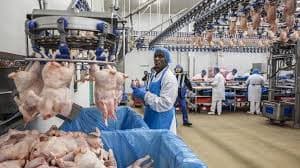
This spring, the large American slaughterhouses and meat processing companies acted as transmission hubs for COVID-19 infections among their workers.
Approximately 300,000 employees contracted coronavirus at their workplace and brought it home. This resulted in around 4,300 to 5,200 deaths, according to a study by the United States National Academy of Sciences.
The Proceedings of the National Academy of Sciences (PNAS) investigated the consequences of the government decision to classify the food supply as a 'strategic necessity' and keep it operational during the COVID-19 outbreak and the closure of many businesses.
Promotion
Although the U.S. tried to balance limiting the spread of coronavirus with keeping essential services open, preliminary research results suggest that meat processing companies amplified COVID-19 infections in multiple communities.
Temporary factory closures were followed by sharper decreases in infection rates compared to regions where meat processing plants and slaughterhouses remained open. According to the researchers, the findings suggest that livestock processing can pose a particularly high public health risk.
The link between increased infections and livestock companies was most pronounced in the largest plants. Slaughterhouses granted exemptions for higher line processing speeds were associated with greater increases in infections than facilities without exemptions.
Earlier German research had already shown that the (low) temperature and (high) humidity in slaughterhouses and refrigerated warehouses create an ideal environment for virus survival. It was not the livestock or meat transmitting the virus but sick employees infecting one another. In many American meat factories, improvements to working conditions on the shop floor were made only late in the process.