

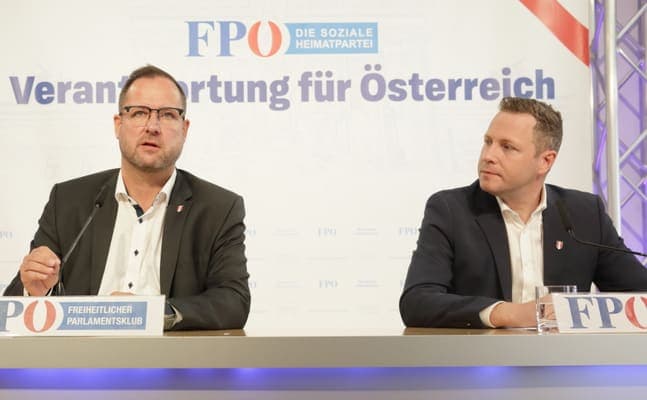
If the country's second and third largest parties reach an agreement with the NEOS liberals next week, this would be the first time Austria has a three-party coalition. It also means that the far-right FPÖ, which had won the elections and become the largest party, will be excluded from power.
NEOS parliamentary leader Beate Meinl-Reisinger made clear that NEOS will only join if significant reforms are implemented, especially in the areas of education and transparency. This has broadened the conversation about coalition formation but also increased the complexity of the negotiations.
It became clear during the election campaign that the other parties were not willing to cooperate with the extreme positions and opinions of FPÖ party leader Herbert Kickl. Therefore, Federal President Alexander Van der Bellen (Greens) decided to assign the mandate for coalition formation to the leaders of the second and third largest parties. In light of the political uncertainty, Van der Bellen made a call to all parties to be willing to 'pursue new paths.'
Promotion
ÖVP leader Nehammer remained noncommittal about whether an agreement can ultimately be reached. In any case, he wants to look at a 'high pace' but also 'seriousness.' Many different perspectives make it possible to find the best solutions for everyone, according to SPÖ negotiator Babler.
Observers in Vienna point out that it will still be quite a challenge to align ÖVP and SPÖ because the two parties have significant disagreements on many issues. The chance of a three-party agreement is considered greater than a two-party deal. In recent years, the SPÖ has been a fierce opposition to the ÖVP coalition with the Greens.
The Greens have resigned themselves to being excluded from the new government for now, although coalition talks have not yet been successfully concluded. However, party leadership says that it is of the utmost importance that the FPÖ is kept out of the center of power. The Greens would "accept the role of a constructive opposition with a sense of responsibility," promised party chairman Kogler.
Another element that has influenced the political context are the recent protests during the national holiday, where thousands of demonstrators protested against the new parliamentary president Rosenkranz (FPÖ) laying a wreath at the commemoration of Kristallnacht and the persecution of Jews.
The new parliamentary president was elected last month with the support of 100 of the 183 parliamentary seats. The FPÖ holds 57 seats. Even if the parliamentarians of his party voted unanimously for Rosenkranz, he must have received support from other factions. Many Austrians have reacted in shock to this.