

Danish Agro announced three years ago that its subsidiary Volimix would start producing vitamins and minerals in China for international pig producers, including in Russia. The plan was first suspended and is now definitively canceled.
Before the Russian invasion of Ukraine, Vilomix had significant sales to Russia. The Danish dairy giant has now announced that it will completely withdraw from trade with Russia. Danish Agro says it has realized the risks involved in investing in the Russian market given the ongoing tensions and sanctions between Russia and the West.
The withdrawal from trade with Russia marks a significant strategic shift for Danish Agro, which was previously an important player in the Russian market, especially in the dairy sector.
Promotion
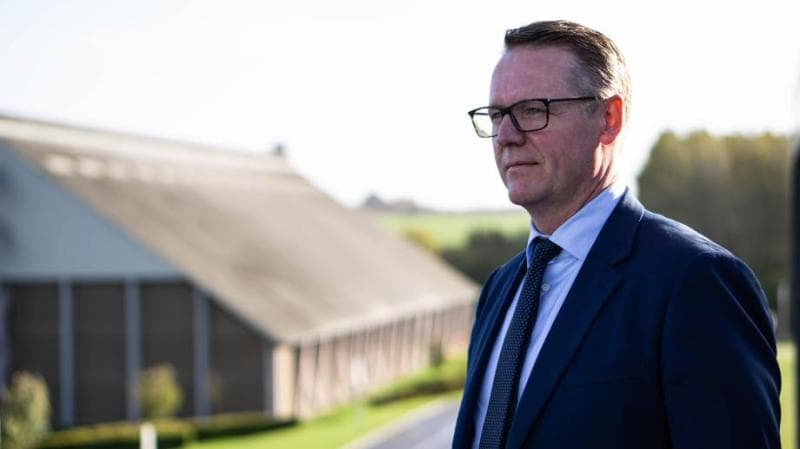
These developments have also led to a reshuffle within the company, including the departure of the chairman of the board. Jorgen Nikkelsen has announced that he will not stand for re-election next year. The chairman’s departure will likely herald a new direction for the company.
Jørgen H. Mikkelsen has been on the board of Danish Agro since 1986 and was elected chairman in 1995. He has thus held the political leadership during the transformation of the company from a local player to one of Europe’s largest raw material companies. The board of Danish Agro consists of six farmers, one employee representative, and two external board members.
Jørgen H. Mikkelsen is a trained farmer and was born and raised on a farm near Køge. At age 22, he established himself on a small estate. Like the raw materials company he leads, the estate has participated in structural development and now comprises 500 hectares where grain and rapeseed are cultivated.