

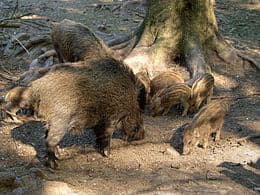
Agricultural officials in Kiel say it is no longer a question of if but when the first infected wild boars will appear there. For 2024, the count in Germany is already at 114 ASF cases. These infected wild boars have so far all been found in the eastern states of Saxony and Brandenburg; 73 in the region between Dresden and the Polish border.
A few years ago, the Danes installed a 70-kilometer-long fence along the Danish-German border in South Jutland. The fence is not thick but is one and a half meters high. The border is not hermetically sealed, however, as there are approximately 20 openings for highways and rivers and canals.
Cameras monitor whether wild boars still cross into the country. Small animals are allowed through because small passages have been made here and there to avoid completely disrupting flora and fauna.